
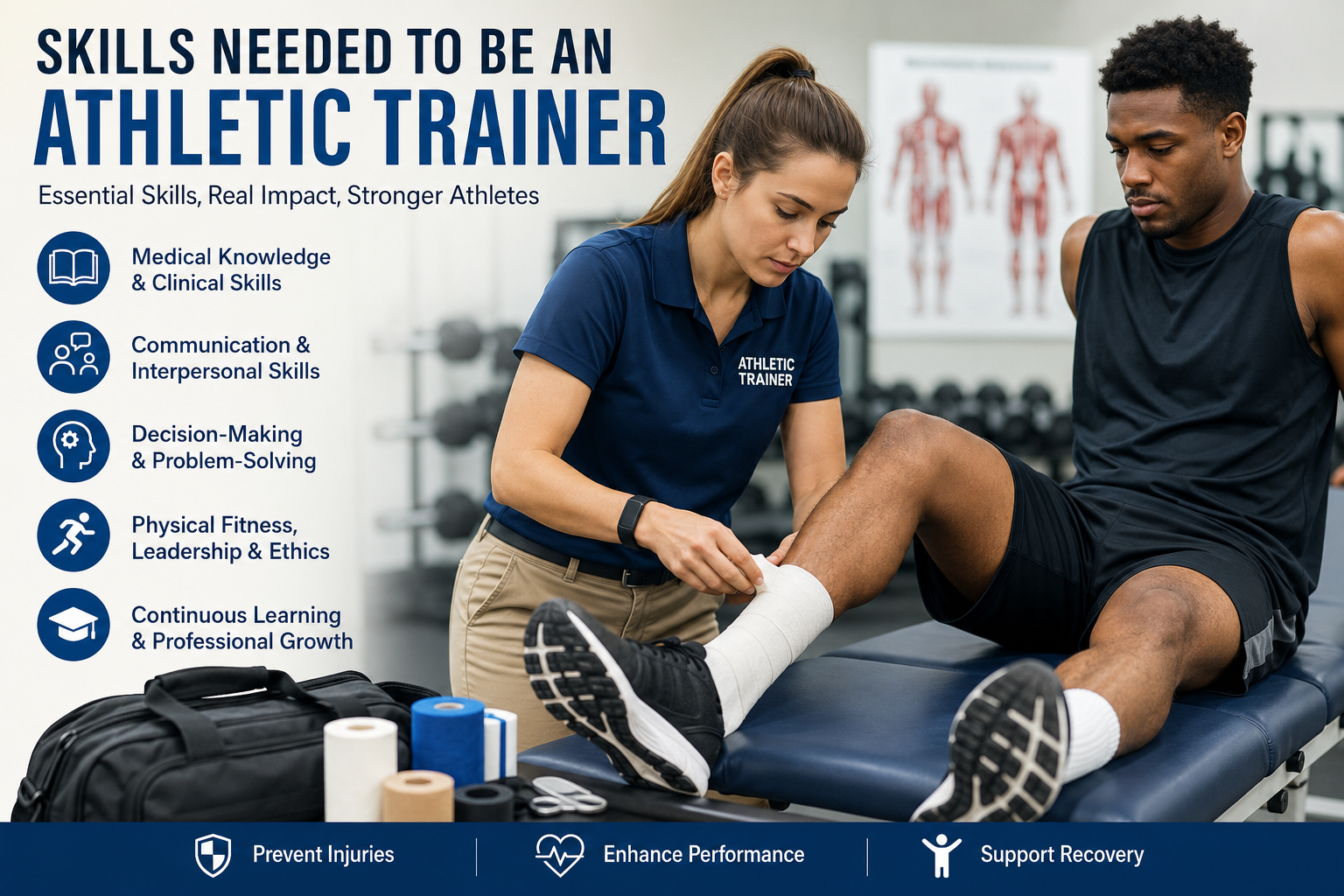
Introduction
Athletic trainers play a vital role in keeping athletes healthy, preventing injuries, and helping them recover safely. Whether they work with school teams, professional athletes, or fitness enthusiasts, they combine medical knowledge with practical problem-solving every day. If you’re considering this rewarding career, understanding the skills needed to be an athletic trainer is the first step toward success. Beyond treating injuries, athletic trainers educate athletes, develop rehabilitation plans, and work closely with healthcare professionals to improve performance and reduce injury risks. This career requires technical expertise, emotional intelligence, and a passion for helping others. In this guide, we’ll explore the essential skills every athletic trainer should develop and explain how these abilities contribute to long-term success in sports medicine.
Medical Knowledge and Clinical Skills Are the Foundation
A strong understanding of anatomy, physiology, and sports medicine forms the backbone of athletic training. Athletic trainers must recognize injuries quickly, evaluate their severity, and decide on the most appropriate course of action. Their clinical expertise directly affects an athlete’s recovery and future performance.
One of the most important responsibilities is injury assessment. Trainers need to identify sprains, fractures, muscle strains, concussions, and other sports-related conditions. They also provide immediate first aid and emergency care when accidents occur during practices or competitions.
Rehabilitation planning is another essential clinical responsibility. Athletic trainers create personalized recovery programs that include stretching, strengthening exercises, mobility work, and injury prevention techniques. Monitoring progress ensures athletes return to competition safely rather than rushing back too soon.
Supporting skills include:
- Injury prevention strategies
- Sports rehabilitation techniques
- Emergency medical response
- CPR and first aid certification
- Taping and bracing techniques
- Knowledge of exercise science
- Understanding biomechanics
Because sports medicine continues to evolve, athletic trainers should commit to lifelong learning. Attending workshops, earning certifications, and staying informed about new rehabilitation methods help maintain professional competence and improve patient care.
Communication and Interpersonal Skills Build Trust
Excellent communication is among the most valuable skills for athletic trainers because they work with people from diverse backgrounds every day. Athletes, coaches, physicians, physical therapists, and parents all rely on clear information about injuries and recovery.
Athletes often experience anxiety after an injury. Athletic trainers must explain diagnoses and rehabilitation plans in simple language while encouraging confidence throughout recovery. Motivating injured athletes to follow treatment plans requires patience and empathy.
Strong listening skills are equally important. Athletes frequently describe pain differently, so trainers must ask thoughtful questions and carefully observe symptoms before making decisions.
Key interpersonal skills include:
- Active listening
- Empathy and compassion
- Clear verbal communication
- Written documentation
- Conflict resolution
- Team collaboration
- Professionalism
Athletic trainers also coordinate with physicians regarding treatment updates and medical referrals. Accurate documentation ensures every healthcare professional involved understands an athlete’s condition and progress.
Building positive relationships creates trust, and trust encourages athletes to report injuries early instead of hiding symptoms that could become more serious.
Decision-Making, Critical Thinking, and Problem-Solving
Sports environments are unpredictable. Injuries can happen without warning, and athletic trainers often need to make important decisions within seconds. This makes critical thinking one of the most essential professional abilities.
During games or competitions, trainers quickly assess injuries while determining whether athletes can safely continue participating. These decisions require combining medical knowledge with careful observation and practical judgment.
Problem-solving also extends beyond emergencies. Rehabilitation plans rarely follow identical timelines because every athlete heals differently. Trainers continuously evaluate progress and modify exercises based on pain levels, mobility improvements, and strength development.
Important decision-making abilities include:
- Risk assessment
- Clinical reasoning
- Time management
- Prioritization
- Adaptability
- Analytical thinking
- Stress management
Athletic trainers frequently manage several injured athletes simultaneously while supporting active teams. Staying organized helps ensure every athlete receives appropriate care without overlooking important details.
Remaining calm under pressure benefits everyone involved. When athletes see a confident, composed trainer, they’re more likely to trust medical advice and cooperate during treatment.
Physical Fitness, Leadership, and Professional Ethics
Athletic trainers spend much of their workday standing, walking, demonstrating exercises, carrying equipment, and responding quickly during emergencies. Maintaining personal fitness helps them perform these demanding responsibilities effectively.
Leadership is another defining characteristic. Trainers often educate athletes about nutrition, hydration, injury prevention, and conditioning. They encourage healthy habits that improve performance while reducing injury risks.
Professional ethics are equally important because athletic trainers handle confidential medical information and make decisions that directly affect athletes’ health. Prioritizing safety over competition demonstrates integrity and professionalism.
Essential professional qualities include:
- Physical endurance
- Leadership abilities
- Organization
- Attention to detail
- Accountability
- Ethical decision-making
- Confidence under pressure
Technology also plays a growing role in athletic training. Many trainers use electronic health records, rehabilitation software, wearable fitness devices, and injury tracking systems to monitor progress more accurately.
Continuous professional development strengthens long-term career success. Certifications, advanced education, and specialized sports medicine training help trainers stay competitive while expanding career opportunities in schools, colleges, hospitals, rehabilitation centers, and professional sports organizations.
How to Develop the Skills Needed to Be an Athletic Trainer
Developing professional skills doesn’t happen overnight. Successful athletic trainers build their expertise through education, hands-on experience, and continuous learning. Most begin by earning a degree in athletic training or a related healthcare field before completing supervised clinical training.
Practical experience is invaluable. Working alongside experienced athletic trainers allows students to apply classroom knowledge in real-world settings. Exposure to different sports also helps them understand the unique injury patterns and rehabilitation needs of various athletes.
Ways to strengthen your skills include:
- Volunteer with school or community sports teams.
- Complete internships in sports medicine clinics.
- Earn CPR and first aid certifications.
- Attend professional conferences and workshops.
- Stay updated on current research in sports medicine.
- Practice communication and leadership skills daily.
Networking with healthcare professionals can also open doors to mentorship and career opportunities. Joining professional organizations keeps trainers informed about industry standards, certifications, and emerging best practices.
Ultimately, becoming an outstanding athletic trainer requires dedication, compassion, and a willingness to keep learning throughout your career.
Conclusion
Developing the skills needed to be an athletic trainer involves much more than learning how to treat sports injuries. Successful professionals combine medical expertise, communication, leadership, critical thinking, and physical endurance to support athletes at every stage of their performance and recovery. As sports medicine continues to advance, athletic trainers who embrace lifelong learning and prioritize athlete well-being will enjoy rewarding careers in a wide variety of settings. If you’re passionate about health, fitness, and helping others perform at their best, building these essential skills is the perfect foundation for a successful future in athletic training.
FAQs
What qualifications do you need to become an athletic trainer?
Most athletic trainers earn a bachelor’s or master’s degree in athletic training and complete clinical experience before obtaining professional certification, depending on local licensing requirements.
What is the most important skill for an athletic trainer?
Communication is one of the most valuable skills because athletic trainers regularly work with athletes, coaches, physicians, and families.
Do athletic trainers need emergency medical training?
Yes. CPR, first aid, emergency response, and injury assessment are essential parts of an athletic trainer’s responsibilities.
Is physical fitness important for athletic trainers?
Absolutely. Athletic trainers spend long hours on their feet, demonstrate exercises, and respond quickly during sports events.
Can athletic trainers work outside of sports teams?
Yes. Athletic trainers also work in hospitals, rehabilitation centers, schools, universities, military settings, occupational health programs, and sports medicine clinics.
