
A Healthy Pond Needs Regular Care
A garden pond can completely transform an outdoor space.
Whether you have a small wildlife pond, an ornamental water feature or a larger pond containing fish, keeping the water clear and the ecosystem balanced requires some regular attention.
The good news is that pond maintenance doesn’t need to become a complicated weekly project.
With the right equipment and a few consistent habits, you can prevent many common pond problems before they become difficult to manage.
Start With the Right Pond Pump
The pump is one of the most important pieces of equipment in many garden ponds.
It circulates water and can also move dirty pond water toward the filtration system.
When choosing a pump, don’t simply select the largest model available.
Consider:
- Pond volume
- Fish population
- Filter requirements
- Waterfalls or fountains
- Required flow rate
A pump that is properly matched to your setup can help keep water circulating efficiently.
Use Proper Filtration
If your pond contains fish, filtration becomes particularly important.
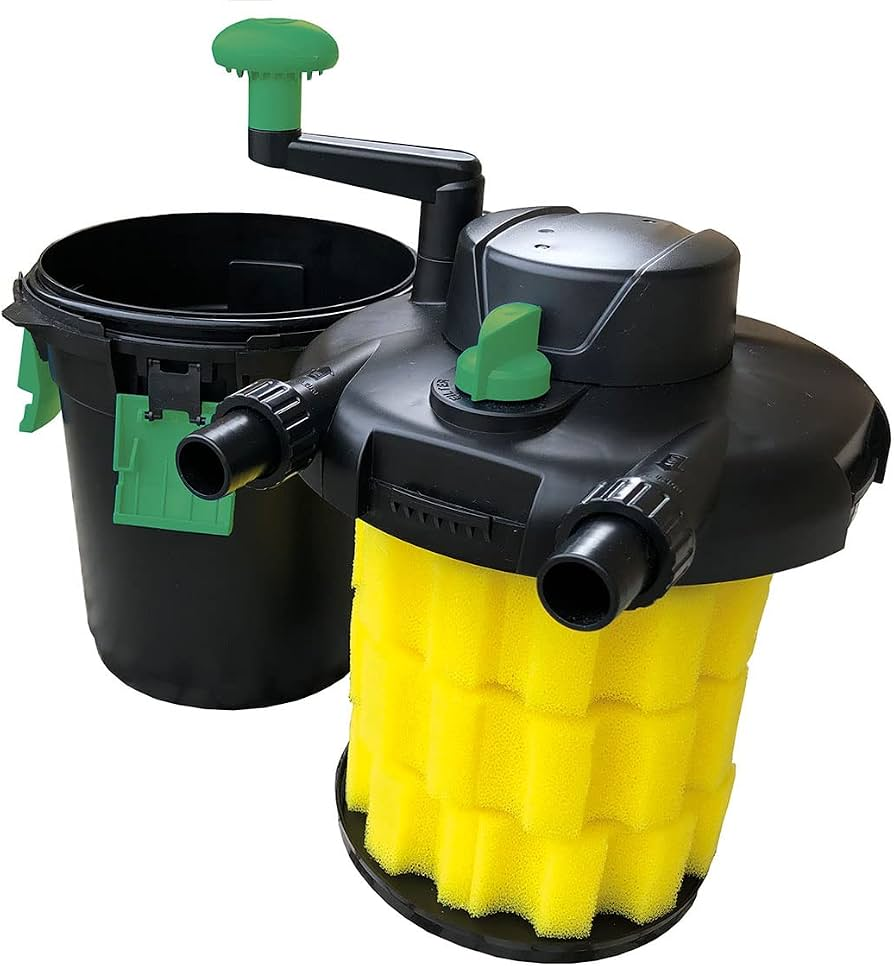
A pond filter helps remove waste and debris while supporting the biological processes that contribute to healthier water.
Most filtration systems use a combination of different stages.
Mechanical Filtration
Physical filter material captures debris and particles from the water.
Biological Filtration
Biological media provides an environment where beneficial bacteria can develop and help process waste.
UVC
Many pond filters also incorporate an ultraviolet clarifier designed to help control the microscopic algae associated with green pond water.
Together, these systems help maintain clearer and healthier pond conditions.
Match Your Filter to Your Pond
A filter needs to be appropriately sized for the amount of water it needs to process.
Start by calculating your pond volume.
Then consider additional factors such as:
- Number of fish
- Koi or other heavily stocked fish
- Sun exposure
- Pump flow
- Pond depth
A heavily stocked koi pond can require significantly more filtration than a small ornamental pond without fish.
Don’t Overclean Your Filter
Cleaning the filter is important, but how you clean it matters too.
Filter media supports beneficial bacteria.
Rather than aggressively sterilising everything, follow the manufacturer’s cleaning instructions and preserve the biological environment within the filtration system where appropriate.
Routine maintenance can help maintain water flow while allowing biological filtration to continue functioning effectively.
Understand Why Pond Water Turns Green
Green pond water is usually associated with suspended algae.
Several conditions can contribute to algae problems, including:
- High sunlight exposure
- Excess nutrients
- Insufficient filtration
- Organic waste
- Imbalances within the pond
Rather than repeatedly treating the appearance of green water, try to identify why algae are thriving.
Improving filtration and introducing appropriate pond plants can form part of the solution.
Add Pond Plants
Plants aren’t only decorative.
They can become an important part of the pond environment.
Different types of plants can provide:
- Shade
- Cover for wildlife
- Visual interest
- Competition for nutrients
Water lilies can help shade parts of the pond surface, while oxygenating and marginal plants can contribute to a more varied pond environment.
Choose plants appropriate for your pond depth and conditions.
Remove Leaves Before They Sink
One of the simplest maintenance habits is regularly removing fallen leaves.
If leaves remain in the pond, they eventually sink and decompose.
Over time, this can contribute to sludge at the bottom.
Use a pond net or skimmer to remove:
- Leaves
- Twigs
- Dead plant material
- Floating debris
This becomes particularly important during autumn.
Deal With Pond Sludge
Some organic material will inevitably accumulate at the bottom of a pond.
A small amount isn’t necessarily unusual, but excessive sludge can become problematic.
Prevention is usually easier than allowing large amounts to accumulate.
Regularly remove debris and maintain appropriate filtration.
A pond vacuum can also be useful when physical removal becomes necessary.
Be Careful With Pond Treatments
Pond treatments are available for problems such as:
- Blanketweed
- Green water
- Sludge
- Cloudy water
- Duckweed
But treatments shouldn’t automatically become your first response to every change in the pond.
Identify the underlying problem first and always follow the manufacturer’s directions carefully.
Some treatments also depend on water temperature and other pond conditions.
Test Your Pond Water
Clear water doesn’t automatically mean perfect water quality.
Testing can provide useful information about conditions that aren’t immediately visible.
Depending on your pond and fish, tests may cover factors such as:
- pH
- Ammonia
- Nitrite
- Nitrate
If you keep fish, monitoring water quality becomes particularly important.
Unexpected fish behaviour or recurring water problems can sometimes indicate that something within the pond environment needs attention.
Don’t Overfeed Your Fish
Feeding can influence pond water quality.
Food that isn’t eaten doesn’t simply disappear.
It can break down and contribute additional organic material and nutrients to the water.
Feed according to:
- Fish type
- Season
- Water temperature
- Manufacturer guidance
Remove significant amounts of uneaten food rather than allowing it to remain in the pond.
Prepare for Autumn
Autumn is one of the busiest seasons for pond maintenance.
As leaves begin falling:
- Remove debris regularly.
- Trim dying pond plants where appropriate.
- Consider using a pond cover net.
- Check pumps and filters.
- Monitor fish feeding as temperatures fall.
Completing these jobs early can significantly reduce the amount of decomposing material entering the pond.
Adjust Your Routine for Winter
Pond maintenance changes as temperatures fall.
Fish activity and biological processes slow down considerably in colder water.
Avoid assuming that the same feeding and treatment routine used during summer should continue throughout winter.
For example, Pondkeeper notes that most pond treatments won’t work effectively at temperatures of 10°C or below.
Always check the instructions for your individual products.
Spring Is the Time to Check Everything
As temperatures begin rising again, inspect your pond equipment.
Check:
- Pump operation
- Filter condition
- UVC equipment
- Hoses and connections
- Pond liner
- Plants
- Water quality
Spring is also a useful time to remove accumulated debris and prepare the pond for increased biological activity.
Maintain Your Pond During Summer
Warm weather can increase algae growth and evaporation.
During summer:
- Monitor water levels.
- Keep filtration running appropriately.
- Remove excessive algae.
- Maintain plants.
- Check fish regularly.
- Monitor water quality.
Avoid making sudden large changes unless necessary.
A stable pond environment is generally easier to maintain than one constantly undergoing major interventions.
Building a New Pond?
Good maintenance begins during construction.
Before buying a liner, calculate:
- Maximum pond length
- Maximum width
- Maximum depth
- Required overlap
Pondkeeper currently provides an online pond calculator that uses these measurements to calculate pond volume, surface area and required liner dimensions.
It can also provide relevant pump and filter suggestions based on the pond information entered.
Choose the Right Liner
The liner creates the foundation of many garden ponds.
Current liner options include materials such as:
- EPDM
- PVC
- Butyl
- Flexible pond liners
- Stone-faced liners
Pond underlay can also provide additional protection against stones and roots underneath the liner.
Choosing an appropriate liner during construction can help avoid much more difficult repairs later.
Create a Simple Maintenance Schedule
Pondkeeping becomes easier when maintenance is divided into small regular jobs.
Weekly
Remove visible debris and check that equipment is operating normally.
Monthly
Inspect filters, pumps and water conditions more closely.
Seasonally
Adjust feeding, plant care and maintenance according to temperature and weather.
Annually
Inspect the overall condition of equipment, hoses, electrical components and the pond structure.
Always follow the maintenance instructions supplied with individual equipment.
Pondkeeper UK
Pondkeeper is a UK pond supplies specialist that has been selling online since 2005.
Its current range includes:
- Pond pumps
- Pond filters
- Pond liners
- Pump and filter sets
- Pond kits
- Pond vacuums
- UVC clarifiers
- Pond treatments
- Fish food
- Pond plants
- Water features
- Solar pond equipment
- Lighting
- Pond accessories
- Replacement parts
The retailer also provides pond-building guides, liner guidance, FAQs and an online pond calculator.
Final Thoughts
A clear, healthy-looking pond isn’t usually the result of one miracle product.
It’s the result of balance.
Use an appropriately sized pump and filtration system, remove organic debris regularly, maintain your equipment and adjust your routine throughout the seasons.
If a problem appears, try to understand the underlying cause before reaching immediately for a treatment.
With regular maintenance and the right equipment, your garden pond can remain an attractive and enjoyable part of your outdoor space throughout the year.
Pondkeeper’s range of pumps, filters, liners, treatments and pond-maintenance equipment provides options for everything from building a new wildlife pond to maintaining an established fish pond.
