
Introduction
When it comes to luxury fashion, few names carry as much prestige and influence as Gucci. Known for its distinctive craftsmanship, iconic logos, and trend-setting collections, the brand has become a global symbol of elegance and innovation. From handcrafted leather goods to runway-ready apparel, Gucci has consistently redefined luxury while maintaining its rich heritage. Over the decades, the Italian fashion house has attracted celebrities, fashion enthusiasts, and collectors alike. Its ability to blend timeless sophistication with contemporary creativity has helped it remain relevant across generations. Whether you’re a longtime admirer or new to the world of high fashion, understanding Gucci’s journey offers valuable insight into one of the most influential brands in fashion history.
The History and Origins of Gucci
Gucci’s story began in 1921 when founder Guccio Gucci established a small leather goods company in Florence, Italy. Inspired by the refined luggage carried by wealthy travelers he encountered while working in luxury hotels, Guccio sought to create products that embodied sophistication and superior craftsmanship.
Initially specializing in leather travel accessories, the company quickly earned a reputation for exceptional quality. During the 1930s and 1940s, Gucci expanded its product offerings and developed signature design elements that would later become iconic. Resource shortages during World War II prompted the brand to experiment with alternative materials, leading to innovative designs that showcased creativity and resilience.
As the decades progressed, Gucci transformed from a respected Italian leather goods maker into an international luxury powerhouse. By the 1950s and 1960s, celebrities, aristocrats, and fashion-conscious consumers embraced the brand. Its popularity spread throughout Europe and the United States, solidifying Gucci’s position among the world’s leading luxury fashion houses.
Today, the brand’s heritage remains deeply rooted in Italian craftsmanship while continuing to evolve with changing fashion trends and consumer preferences.
Gucci’s Signature Designs and Iconic Products
One reason Gucci remains so recognizable is its collection of iconic design elements. These signature features have become symbols of luxury and status around the world.
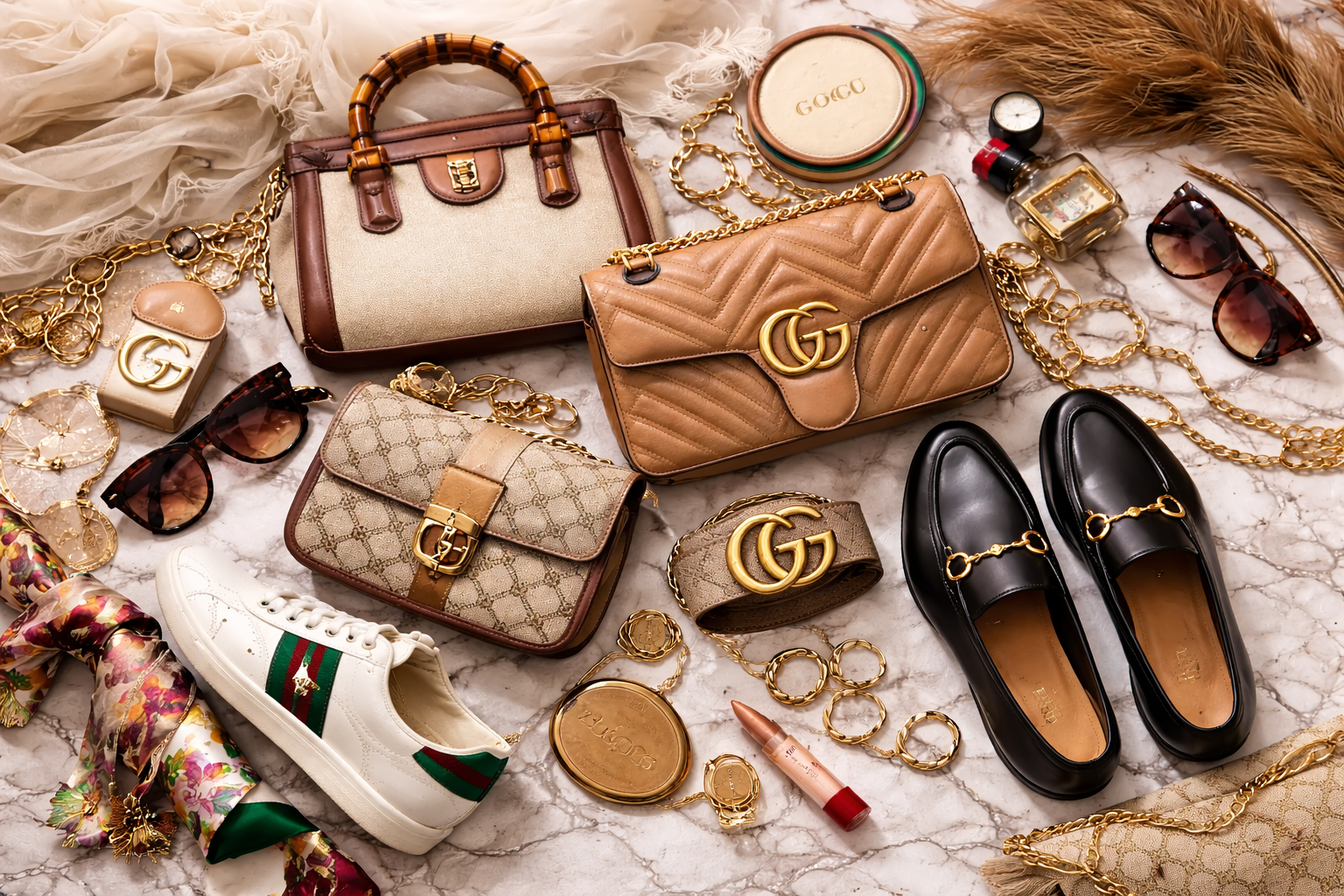
Among the most famous is the interlocking GG logo, which pays tribute to founder Guccio Gucci. The logo appears on handbags, belts, shoes, wallets, and accessories, instantly identifying the brand. Another hallmark is the green-red-green stripe, originally inspired by saddle girths used in equestrian sports.
Gucci handbags are especially sought after. Designs such as the Jackie Bag, Bamboo Bag, and Dionysus Bag have achieved legendary status among fashion enthusiasts. These pieces combine premium materials with timeless aesthetics, making them both practical and collectible.
The brand’s footwear collection is equally influential. The Gucci Horsebit Loafer, introduced in the 1950s, remains one of the most recognizable luxury shoes ever created. Meanwhile, Gucci sneakers have become staples in contemporary streetwear culture.
Beyond accessories, Gucci’s ready-to-wear collections feature bold prints, intricate embroidery, and innovative silhouettes. This blend of tradition and experimentation helps the brand maintain its distinctive identity while appealing to modern consumers.
Gucci’s Influence on Global Fashion
Few luxury brands have shaped contemporary fashion as profoundly as Gucci. The company has consistently influenced trends across luxury, streetwear, and popular culture.
Throughout its history, Gucci has embraced artistic expression and pushed creative boundaries. Under various creative directors, the brand has reinvented itself while maintaining its core identity. These transformations have often set industry trends rather than simply following them.
Celebrity endorsements have also played a major role in Gucci’s success. Actors, musicians, athletes, and influencers regularly showcase Gucci products on red carpets, social media platforms, and major events. This visibility strengthens the brand’s cultural relevance and introduces it to new audiences.
Gucci has also been a pioneer in blending luxury fashion with modern digital marketing strategies. Its innovative campaigns often combine storytelling, art, and technology to engage younger consumers.
Furthermore, collaborations with artists and designers have expanded Gucci’s reach beyond traditional fashion circles. By embracing creativity and cultural diversity, the brand continues to influence how luxury is perceived and consumed worldwide.
Sustainability and Innovation at Gucci
Modern consumers increasingly value sustainability, and Gucci has made significant efforts to address environmental and social responsibilities. The brand recognizes that luxury fashion must evolve to meet changing expectations regarding ethical production and sustainability.
One major focus has been reducing environmental impact throughout the supply chain. Gucci has invested in responsible sourcing practices, renewable energy initiatives, and sustainable materials. These efforts aim to minimize waste while maintaining the high-quality standards expected from a luxury brand.
The company has also implemented programs to support transparency and accountability within its manufacturing processes. Ethical labor practices and responsible resource management have become key priorities.
Innovation extends beyond sustainability. Gucci continues to explore digital experiences, virtual fashion, and emerging technologies. The brand has embraced online retail, digital fashion campaigns, and even virtual products designed for modern consumers.
These initiatives demonstrate how Gucci balances tradition with forward-thinking strategies. By investing in both sustainability and innovation, the company positions itself for long-term success while addressing the concerns of future generations.
Why Gucci Remains a Symbol of Luxury
Luxury brands come and go, but Gucci has maintained its status for more than a century. Several factors contribute to its enduring appeal.
First, the brand consistently delivers exceptional craftsmanship. Skilled artisans use premium materials and meticulous techniques to create products that stand the test of time. This commitment to quality reinforces customer trust and loyalty.
Second, Gucci successfully combines heritage with innovation. While honoring its Italian roots, the company continuously adapts to changing consumer tastes. This balance allows it to remain relevant in an increasingly competitive marketplace.
Exclusivity also plays a crucial role. Limited collections, high-end materials, and distinctive designs create a sense of prestige that appeals to luxury consumers. Owning a Gucci product often represents both personal style and social status.
Finally, the brand’s strong cultural presence ensures ongoing visibility. Through fashion shows, celebrity partnerships, and creative marketing campaigns, Gucci remains at the forefront of global fashion conversations.
These factors collectively explain why Gucci continues to be one of the most respected and influential luxury fashion brands in the world.
Conclusion
Gucci has built a remarkable legacy through craftsmanship, innovation, and timeless design. From its origins in Florence to its position as a global fashion leader, the brand has consistently shaped the luxury industry while adapting to changing trends and consumer expectations. Its iconic products, cultural influence, and commitment to sustainability ensure its continued relevance in the modern fashion landscape. Whether admired for its heritage, style, or innovation, Gucci remains a symbol of sophistication that continues to inspire fashion lovers around the globe.
Frequently Asked Questions (FAQs)
What is Gucci known for?
Gucci is known for luxury fashion, premium leather goods, handbags, footwear, accessories, and its iconic GG logo.
Who founded Gucci?
Guccio Gucci founded the company in Florence, Italy, in 1921.
Why is Gucci considered a luxury brand?
Gucci is considered a luxury brand because of its exceptional craftsmanship, premium materials, exclusive designs, and long-standing heritage.
What are Gucci’s most famous products?
Some of Gucci’s most famous products include the Jackie Bag, Bamboo Bag, Horsebit Loafers, GG belts, and luxury handbags.
Is Gucci focused on sustainability?
Yes, Gucci has implemented various sustainability initiatives, including responsible sourcing, renewable energy programs, and ethical manufacturing practices.
Why is Gucci so popular among celebrities?
Gucci’s distinctive designs, luxury status, and strong cultural influence make it a favorite choice for celebrities and fashion influencers worldwide.
