
Introduction
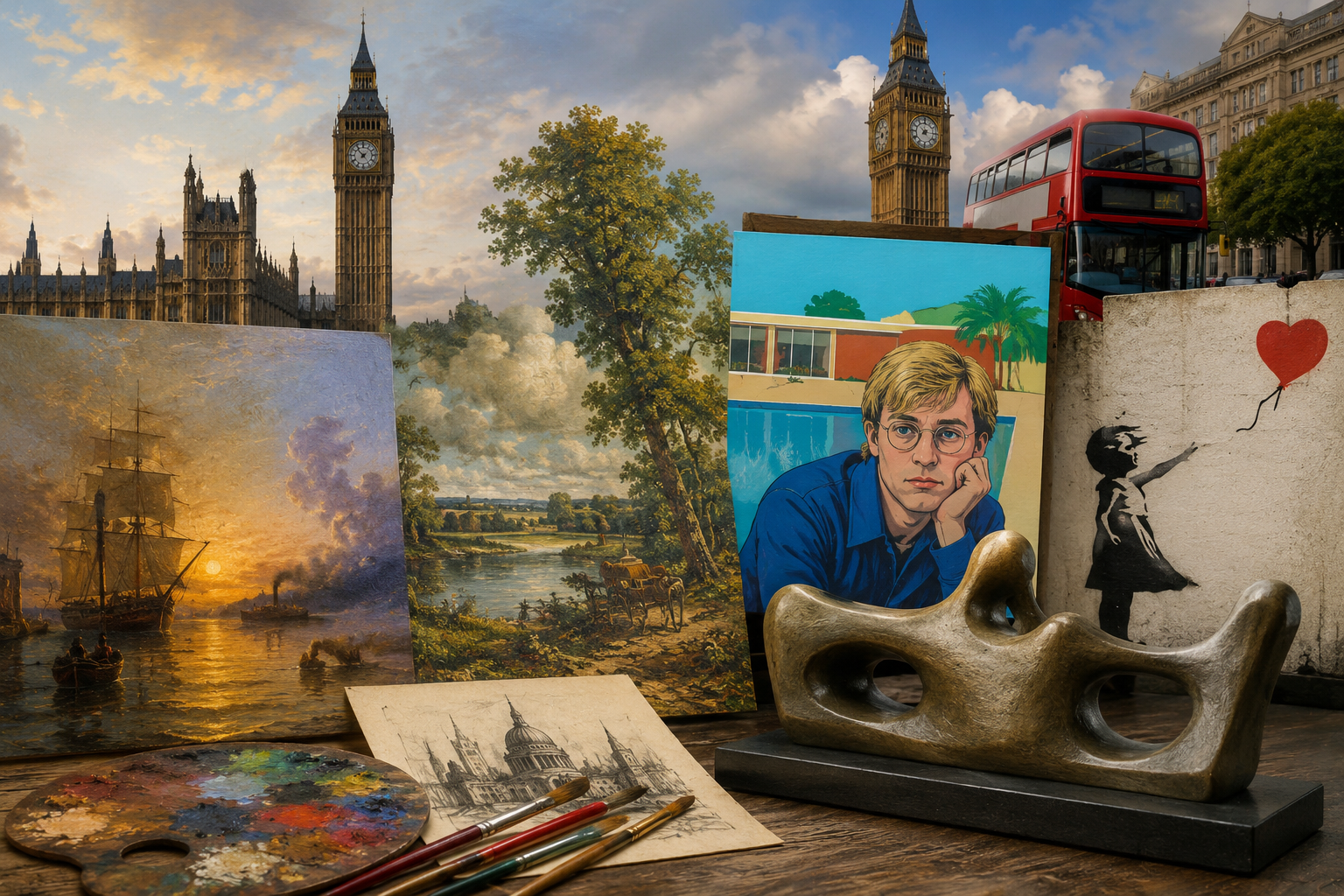
The United Kingdom has produced some of the most influential artists in the history of Western art. From dramatic landscapes and romantic paintings to bold modern installations and mysterious street art, British creativity has continually evolved while leaving a mark around the world. Many famous artists in UK history have challenged artistic conventions, introduced new techniques, and reflected the social and cultural changes of their times. Their work can be found in major museums, galleries, public spaces, private collections, and even city streets. Whether you’re interested in classical British painting, modern art, portraiture, or contemporary street culture, there’s an extraordinary range of artists to discover. Let’s explore some of Britain’s best-known creative figures and understand why their work remains relevant today.
J.M.W. Turner: The Master of Light and Landscape
Joseph Mallord William Turner, better known as J.M.W. Turner, is widely regarded as one of Britain’s greatest landscape painters. Born in London in 1775, Turner developed a fascination with light, atmosphere, weather, and the power of nature. His paintings often moved beyond realistic representation, using expressive brushwork and dramatic colors to create emotional experiences.
Turner became famous for paintings in uk that captured storms, sunsets, ships, mountains, rivers, and dramatic landscapes. One of his most recognized works, The Fighting Temeraire, depicts an old warship being towed toward its final resting place. The painting is often interpreted as a reflection on change, aging, and the passing of an era.
Another important work is Rain, Steam and Speed – The Great Western Railway, which demonstrates Turner’s interest in industrialization and movement. Rather than presenting the train in precise detail, he used atmospheric effects to make the scene feel almost dreamlike.
Turner’s influence on art extends far beyond Britain. His loose technique and emphasis on light helped pave the way for later developments in Impressionism and modern painting. Today, his legacy is closely associated with the Tate Britain, which holds an important collection of his works.
For anyone studying British landscape art, Turner is an essential starting point. His paintings demonstrate how an artist can transform ordinary scenery into something powerful, emotional, and unforgettable.
John Constable: Celebrating the English Countryside
John Constable is another major figure in British art, particularly famous for his paintings of the English countryside. Born in Suffolk in 1776, Constable developed a deep connection with the rural landscapes around his home. Unlike artists who traveled extensively to find exotic subjects, he found inspiration close to home.
Constable’s paintings are celebrated for their natural atmosphere and attention to changing weather conditions. He carefully observed clouds, sunlight, trees, rivers, fields, and farm buildings. His famous painting The Hay Wain is one of the best-known examples of traditional English landscape painting. It presents a peaceful rural scene near Flatford Mill, an area that was personally familiar to the artist.
What makes Constable particularly interesting is his approach to painting nature. He wanted landscapes to feel alive rather than perfectly polished. His studies of clouds and changing light helped him develop a more direct and observational style.
Although Constable didn’t receive the same level of recognition during his lifetime that he enjoys today, his reputation eventually grew considerably. His work became an important part of Britain’s artistic identity, especially its romantic vision of the countryside.
Constable’s influence can also be seen in European landscape painting. His ability to combine realistic observation with emotion made his work appealing to later generations of artists.
Together, Constable and Turner represent two different approaches to British landscape art. Constable often emphasized the familiar beauty of rural England, while Turner pushed landscape painting toward abstraction, atmosphere, and emotional intensity.
David Hockney: A Modern British Art Icon
Moving into the 20th and 21st centuries, David Hockney stands out as one of Britain’s most recognizable contemporary artists. Born in Bradford in 1937, Hockney became internationally known for his colorful paintings, portraits, drawings, photography, prints, and digital artwork.
Hockney first gained widespread attention during the 1960s, a period when British art was changing rapidly. His work frequently explored everyday subjects, relationships, architecture, swimming pools, landscapes, and domestic life. His bright colors and distinctive visual style helped him develop an identity that was instantly recognizable.
His California-inspired swimming pool paintings are particularly famous. Works such as A Bigger Splash capture the brightness and clean geometry of modern life while leaving viewers curious about the unseen people and stories behind the scenes.
Hockney has never restricted himself to one medium. Throughout his career, he has experimented with photography, stage design, digital drawing, iPad artwork, and large-scale landscapes. This willingness to embrace new technology has helped keep his work relevant to younger audiences.
His career also demonstrates how contemporary artists can successfully combine traditional artistic principles with modern technology. Instead of treating digital tools as separate from fine art, Hockney has incorporated them into his creative process.
For people interested in modern British art, Hockney is especially important because his career bridges several generations. His work shows that painting can remain relevant even as photography, computers, digital media, and new forms of visual communication continue to develop.
Banksy and the Rise of British Street Art
Few contemporary artists have generated as much public curiosity as Banksy. The anonymous British street artist has become a global cultural phenomenon through politically charged murals, satirical images, and unexpected public installations.
Banksy’s identity remains unconfirmed publicly, and this anonymity has become an important part of his appeal. Rather than relying on traditional gallery exhibitions, his work frequently appears in public spaces. His art often addresses subjects such as war, consumerism, politics, inequality, surveillance, migration, and social injustice.
One reason Banksy has become so influential is his ability to communicate complicated ideas through relatively simple imagery. His works can often be understood immediately, yet they may also encourage deeper questions about society and authority.
Banksy has also challenged conventional ideas about the art market. Street art was once often viewed as temporary or unauthorized graffiti, but his work has helped demonstrate that public art can attract serious international attention and significant financial value.
At the same time, Banksy’s success raises interesting questions. When street art is removed from a wall and placed inside a gallery or private collection, does it retain the same meaning? Is an artwork still rebellious when it becomes commercially valuable?
These questions are part of what makes Banksy important to contemporary British culture. His work isn’t simply about attractive murals. It encourages audiences to think about who controls public spaces, how political messages spread, and what qualifies as fine art.
Banksy represents a very different side of British creativity from Turner and Constable, but his influence shows that Britain’s artistic tradition continues to evolve.
Other Famous British Artists You Should Know
Britain’s artistic history extends far beyond the artists mentioned above. Several other influential figures have contributed significantly to British painting, sculpture, portraiture, and modern art.
William Hogarth, active during the 18th century, became famous for satirical paintings and prints that commented on British society. His works often combined humor with sharp observations about morality, class, politics, and everyday behavior.
Joshua Reynolds was another important figure. As the first president of the Royal Academy, he played a major role in establishing the status of portrait painting in Britain. His portraits of prominent figures helped shape the visual culture of Georgian Britain.
Henry Moore became one of Britain’s most celebrated sculptors. His large-scale abstract sculptures, often inspired by the human body and natural forms, can be found in public spaces and major collections around the world.
Lucian Freud, grandson of psychoanalyst Sigmund Freud, became known for intensely observed portraits and figurative paintings. His thick application of paint and unfiltered approach to the human figure gave his work a distinctive character.
Francis Bacon also transformed modern British painting through disturbing, emotionally intense images of the human figure. His work frequently explored themes of vulnerability, identity, violence, and psychological tension.
Together, these artists demonstrate the extraordinary diversity of British art. Some focused on landscapes, others on portraits, sculpture, satire, abstraction, or contemporary social commentary. Their differences are precisely what make Britain’s artistic heritage so rich.
Why British Artists Continue to Influence the World
The international influence of British artists comes from more than individual masterpieces. Britain has developed a strong ecosystem of museums, galleries, art schools, academies, collectors, public institutions, and cultural events that support artistic development.
Institutions such as Tate Modern, National Gallery, and Victoria and Albert Museum allow visitors to experience British and international art across different periods and movements.
British artists have also repeatedly responded to changes in society. Turner responded to industrialization and technological progress. Constable explored Britain’s rural landscape. Hockney embraced modern lifestyles and digital technology, while Banksy uses public art to question contemporary politics and consumer culture.
This ability to respond to changing times is one reason British art remains relevant. Art isn’t isolated from society; it reflects the concerns, values, conflicts, and ambitions of the people who create and experience it.
For students, tourists, collectors, and casual art lovers, exploring British artists provides a fascinating way to understand the country’s cultural history. A visit to a London gallery can connect centuries of artistic development in a single afternoon.
Whether you prefer classical paintings or provocative street murals, British art offers something worth exploring.
Conclusion
The story of famous artists in UK history is remarkably diverse, stretching from traditional landscape painting to experimental contemporary street art. Turner transformed the way artists portrayed light and nature, while Constable celebrated the English countryside. Hockney brought a colorful modern perspective to painting, and Banksy challenged conventional ideas about public art and social commentary. Alongside them, figures such as Hogarth, Reynolds, Moore, Freud, and Bacon have helped shape Britain’s artistic identity. Their work continues to attract audiences worldwide because it combines technical skill, cultural observation, and creative experimentation. Whether you’re visiting a major British gallery or discovering an artist online, exploring these creative figures offers a fascinating window into Britain’s history and culture.
FAQs
Who is the most famous British artist?
There isn’t one definitive answer, but J.M.W. Turner, John Constable, David Hockney, and Banksy are among the most internationally recognized British artists.
Who is Britain’s most famous landscape painter?
J.M.W. Turner and John Constable are generally considered two of Britain’s most important landscape painters. Both transformed landscape art in different ways.
Is Banksy a British artist?
Yes. Banksy is widely recognized as a British street artist, although his personal identity remains publicly unconfirmed.
Where can I see famous British artwork?
Major collections can be found at institutions including Tate Britain, Tate Modern, the National Gallery, and the Victoria and Albert Museum in London.
What makes British art unique?
British art is diverse rather than defined by one style. It includes landscape painting, portraiture, sculpture, modernism, abstraction, contemporary art, and street art.
Who are some famous female British artists?
Important British women artists include Barbara Hepworth, Tracey Emin, Bridget Riley, Rachel Whiteread, and Paula Rego, each of whom has made a significant contribution to modern and contemporary art.
