
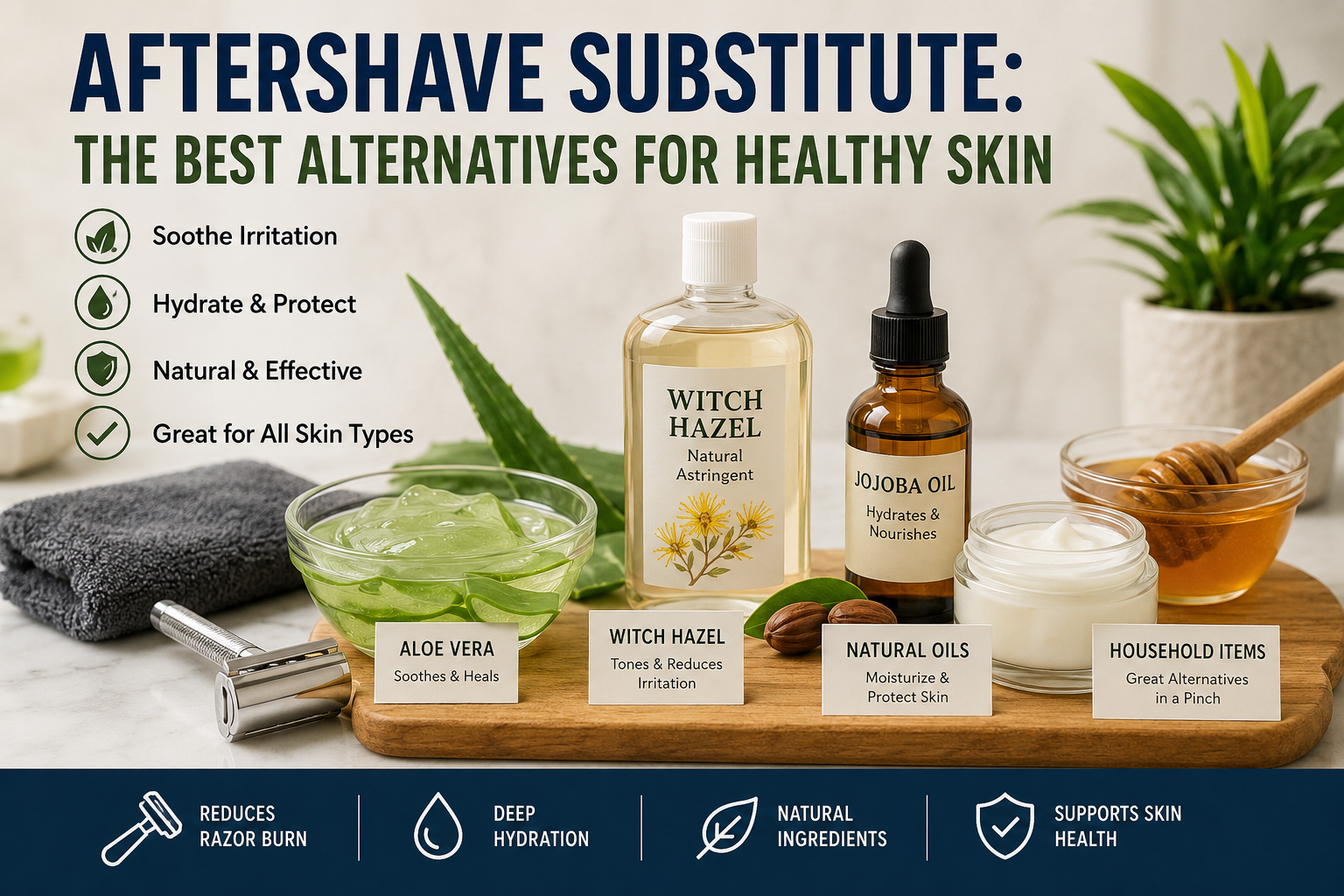
Introduction
Running out of aftershave right after a shave can be frustrating, but the good news is that you don’t always need a commercial product to keep your skin comfortable. An aftershave substitute can work just as effectively, depending on your skin type and preferences. Whether you’re dealing with irritation, razor burn, or dry skin, there are several household and natural alternatives that help soothe freshly shaved skin.
Traditional aftershaves often contain alcohol and fragrances that may irritate sensitive skin. That’s why many people are turning to gentler options that hydrate, calm inflammation, and support skin recovery. In this guide, we’ll explore the best aftershave substitutes, their benefits, and how to use them safely for a smoother shaving experience.
Why Use an Aftershave Substitute?
Aftershave serves several important purposes: disinfecting small cuts, reducing irritation, moisturizing the skin, and leaving a pleasant scent. However, not every commercial aftershave is suitable for everyone. Many formulas contain alcohol, which can cause dryness, redness, and stinging sensations.
An aftershave substitute can offer similar benefits without harsh ingredients. People with sensitive skin often prefer alternatives that focus on hydration and healing rather than fragrance. Natural products may also contain vitamins, antioxidants, and anti-inflammatory compounds that support skin repair.
Another reason to choose substitutes is convenience. You may already have effective options in your bathroom or kitchen. From aloe vera gel to witch hazel, these products are affordable and easy to use. Plus, many substitutes are versatile enough for use beyond shaving, making them practical additions to your skincare routine.
Choosing the right substitute depends on your skin type. Oily skin may benefit from lightweight astringents, while dry skin often requires richer moisturizing ingredients. Understanding your skin’s needs will help you select the most effective alternative.
Aloe Vera: A Natural Skin Soother
Aloe vera is one of the most popular aftershave alternatives—and for good reason. Known for its cooling and healing properties, aloe vera helps calm irritated skin and reduce redness after shaving. It’s especially useful for individuals prone to razor burn or sensitivity.
The gel contains vitamins A, C, and E, which support skin repair and hydration. Its anti-inflammatory compounds can minimize discomfort while encouraging faster healing of minor nicks and cuts. Because it’s lightweight and non-greasy, aloe vera suits nearly every skin type.
To use aloe vera as an aftershave substitute, apply a thin layer of pure gel to freshly shaved skin. Allow it to absorb naturally without rinsing. For extra cooling relief, keep the gel in the refrigerator before use.
When purchasing aloe vera products, look for formulas with minimal additives. Some commercial gels contain alcohol or artificial fragrances that may irritate the skin. Pure aloe vera provides the best results and delivers effective post-shave care without unnecessary chemicals.
Witch Hazel and Natural Astringents
Witch hazel is another excellent aftershave substitute that has been used for generations. Derived from the bark and leaves of the witch hazel plant, it acts as a natural astringent that tightens pores and reduces inflammation.
Unlike alcohol-based aftershaves, alcohol-free witch hazel gently tones the skin without excessive drying. It can help control oil production while soothing irritation caused by shaving. This makes it particularly beneficial for people with oily or acne-prone skin.
Applying witch hazel is simple: place a small amount on a cotton pad and gently dab it onto shaved areas. The cooling sensation provides immediate relief while helping to prevent ingrown hairs and razor bumps.
Other natural astringents, such as rose water and green tea extract, can also serve similar functions. Rose water hydrates while calming redness, and green tea delivers antioxidants that protect the skin from environmental damage. These ingredients offer a balanced approach to post-shave skincare.
Oils and Moisturizers for Deep Hydration
If your skin feels tight or flaky after shaving, moisturizing oils may be the ideal aftershave substitute. Natural oils help restore the skin barrier and lock in moisture, reducing dryness and irritation.
Jojoba oil is especially popular because its composition closely resembles the skin’s natural sebum. It absorbs quickly without leaving a greasy residue and helps maintain hydration levels. Coconut oil is another option, offering antimicrobial properties and deep moisturization, although it may be too heavy for oily skin types.
Argan oil, rich in vitamin E and fatty acids, nourishes the skin while improving elasticity. Applying just a few drops after shaving can leave the skin feeling soft and refreshed.
Fragrance-free moisturizers are also effective alternatives. Dermatologists often recommend simple creams containing ingredients like hyaluronic acid, ceramides, or glycerin. These compounds attract moisture and strengthen the skin barrier, making them excellent choices for daily grooming routines.
Regardless of which product you choose, apply it gently to avoid irritating freshly shaved skin. A little goes a long way in maintaining healthy, comfortable skin after shaving.
Household Items You Can Use in a Pinch
Sometimes, the best aftershave substitute is already sitting in your home. Several everyday ingredients can provide temporary relief after shaving when traditional products aren’t available.
Cold water is perhaps the simplest option. Splashing cold water on your face helps close pores and reduce inflammation. It may not moisturize the skin, but it’s an effective first step after shaving.
Unscented lotion is another practical alternative. If it contains hydrating ingredients and lacks irritating fragrances, it can help soothe dryness and maintain skin comfort.
Honey, known for its antibacterial properties, may be used as a short-term soothing treatment. Applying a thin layer for a few minutes before rinsing can calm irritated skin. Similarly, plain yogurt contains lactic acid and probiotics that may help reduce redness.
While these substitutes can be useful in emergencies, always patch-test unfamiliar products first. What works well for one person may not suit another, especially if you have sensitive or allergy-prone skin.
Conclusion
Finding the right aftershave substitute doesn’t have to be complicated. Whether you choose aloe vera, witch hazel, natural oils, or simple household items, many alternatives can soothe and protect your skin after shaving. The key is selecting products that match your skin type and avoid unnecessary irritants.
Experimenting with different options can help you discover what works best for your routine. With the right substitute, you can maintain healthy, smooth skin without relying solely on traditional aftershave products.
FAQs
What is the best aftershave substitute for sensitive skin?
Aloe vera and fragrance-free moisturizers are often the best choices because they calm irritation and hydrate without harsh ingredients.
Can I use moisturizer instead of aftershave?
Yes, a gentle moisturizer can work as an effective aftershave substitute, especially if it contains soothing ingredients like ceramides or hyaluronic acid.
Is witch hazel better than alcohol-based aftershave?
For many people, yes. Alcohol-free witch hazel tones the skin without causing excessive dryness or irritation.
Can coconut oil be used after shaving?
Yes, coconut oil moisturizes and has antibacterial properties, though it may feel heavy on oily skin.
Does cold water work as an aftershave substitute?
Cold water helps reduce inflammation and close pores, but it doesn’t provide hydration like other alternatives.
