
Many people judge their health and fitness progress by a single number on the bathroom scale.
Weight can be a useful measure, but it does not tell you what that weight is made of.
Two people can weigh exactly the same and have very different levels of muscle and body fat.
This is why more people are paying attention to body composition.
Understanding your body composition can give you a clearer picture of your progress.
This guide explains what body composition is, which metrics matter and how Hume Health can help you track them.
What Is Body Composition?
Body composition describes the different components that make up your body weight.
These include fat mass, muscle mass, bone mass and water.
Rather than looking at total weight alone, body composition shows the balance between these parts.
For example, someone who starts strength training may gain muscle while losing fat.
Their weight might stay the same, even though their body is changing in a positive way.
Why the Scale Alone Can Be Misleading
Body weight can change from day to day for many reasons.
Hydration, salt intake, hormones and digestion can all affect the number on the scale.
These short-term changes do not necessarily reflect changes in fat or muscle.
Focusing only on weight can be frustrating, especially if you are exercising regularly.
Tracking body composition can help you see progress that the scale might hide.
Key Body Composition Metrics to Know
Body fat percentage shows how much of your weight comes from fat.
Muscle mass measures the amount of muscle in your body.
Visceral fat refers to fat stored around the internal organs in the abdominal area.
Body water shows the percentage of your weight made up of water.
Bone mass gives an estimate of the mineral content of your bones.
Basal metabolic rate, often called BMR, estimates how many calories your body uses at rest.
Looking at these metrics together can give a more complete view than any single number.
How Smart Scales Measure Body Composition
Many smart scales use a method called bioelectrical impedance analysis.
A very small, safe electrical signal passes through the body.
Different tissues conduct the signal differently, so the scale can estimate body composition.
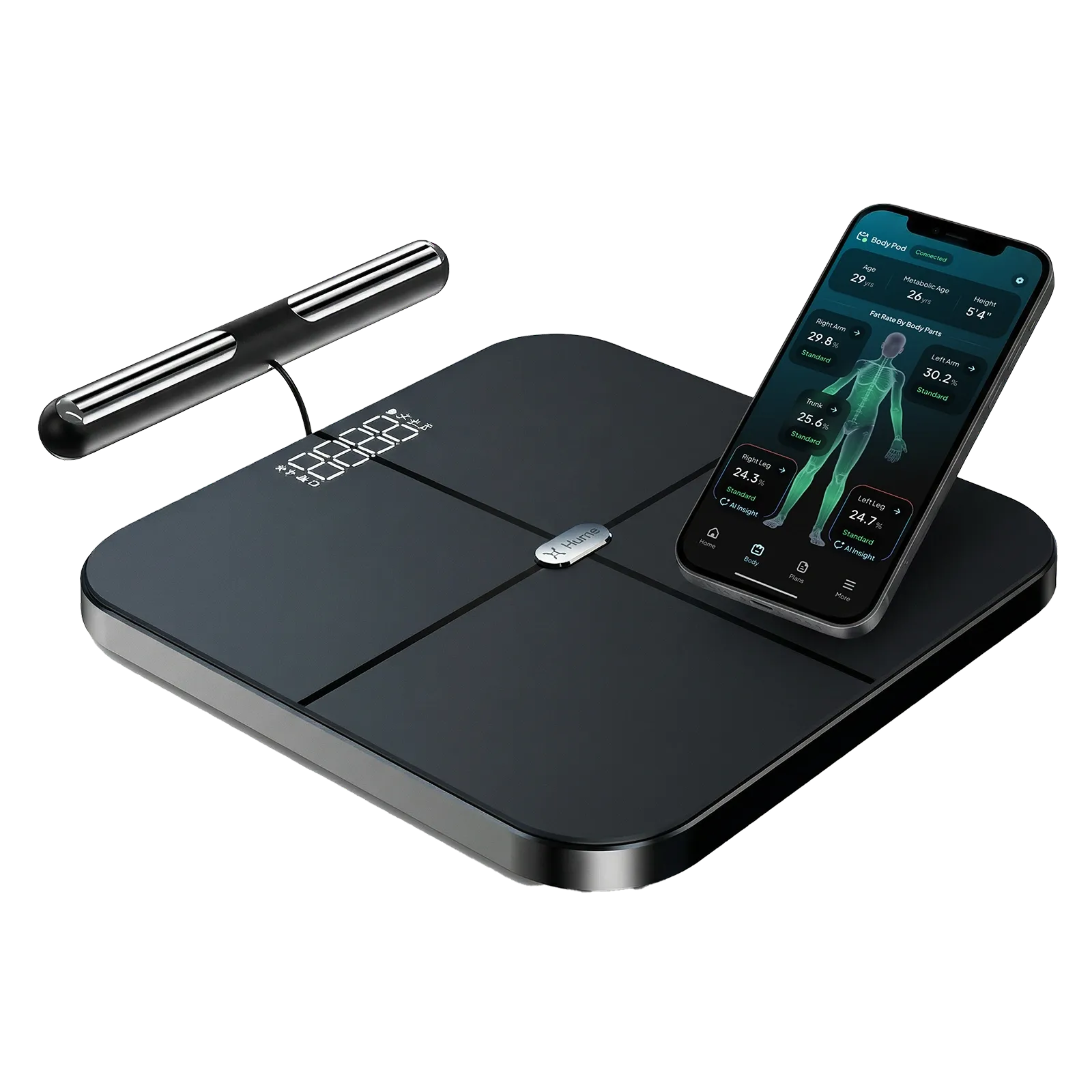
Some devices use contact points for both feet and hands to measure more of the body.
Readings are usually sent to an app, where you can see trends over time.
Home devices provide estimates, so it is best to focus on long-term trends rather than single readings.

Tips for More Consistent Readings
Weigh yourself at the same time of day, ideally in the morning.
Use the scale before eating or drinking and after using the bathroom.
Stand on a hard, flat surface rather than a carpet.
Avoid measuring straight after exercise or a hot shower.
Make sure your feet are clean and dry so they make good contact with the sensors.
Following the same routine each time helps make your results easier to compare.
How to Use Your Data
Tracking data is most useful when it helps you make positive changes.
If your muscle mass is increasing, your strength training is likely working well.
If your body fat percentage is slowly decreasing, your nutrition and activity habits may be on track.
Look at weekly or monthly averages rather than reacting to daily changes.
Combining body composition data with sleep, activity and heart rate information can give even more context.
If you have health concerns, share your data with a doctor or qualified professional.
Habits That Support Healthy Body Composition
Regular strength training helps build and maintain muscle.
Cardiovascular exercise supports heart health and overall fitness.
A balanced diet with enough protein, fibre, fruit and vegetables can support your goals.
Good quality sleep plays an important role in recovery and appetite regulation.
Staying hydrated helps your body function properly and can also improve the consistency of readings.
Small, consistent changes are more sustainable than extreme diets or workout plans.
Body Composition and Ageing
Body composition naturally changes as we get older.
Many adults gradually lose muscle mass over time if they are not active.
This can affect strength, balance and everyday movement.
Regular strength training and enough protein can help maintain muscle as you age.
Tracking muscle mass over months and years can help you notice changes early.
This makes body composition a useful measure at every stage of life, not only for athletes.
Setting Realistic Body Composition Goals
Healthy changes in body composition usually happen gradually.
Gaining muscle takes time and consistent training.
Losing fat too quickly can sometimes mean losing muscle as well.
Aim for steady, sustainable progress rather than dramatic short-term results.
Celebrate improvements in strength, energy and fitness, not only changes in numbers.
Remember that healthy ranges vary depending on age, sex and individual factors.
A healthcare professional can help you set targets that are right for you.
Who Can Benefit From Tracking Body Composition?
People starting a new exercise routine can see whether they are building muscle.
Those working towards weight goals can check that they are losing fat rather than muscle.
Athletes can monitor changes during different training phases.
Older adults can keep an eye on muscle and bone health over time.
Anyone curious about their health can use the data to build better daily habits.
Discover Smart Health Tracking From Hume Health
Hume Health creates smart devices designed to help people understand their bodies in more detail.
The Hume Pod is a body composition scale that tracks many different body metrics.
Readings sync with the Hume app, where you can follow trends and see how your habits affect your results.
Hume also offers the Hume Band, a wearable that tracks activity, sleep and other daily health signals.
Together, these tools can help you build a fuller picture of your health over time.
Final Thoughts
Your weight is only one part of the story.
Body composition shows how much of your body is muscle, fat, water and bone.
Tracking these metrics consistently can help you see real progress and stay motivated.
With smart tools from Hume Health, you can make more informed choices about your health and fitness.
