
Camping offers a wonderful opportunity to escape everyday routines and enjoy the outdoors.
However, staying connected, keeping lights powered and charging essential devices can become challenging when electricity is unavailable.
Portable solar panels provide a convenient way to collect energy from sunlight and recharge compatible power stations.
Whether you enjoy weekend camping, road trips or travelling in a campervan, understanding how solar charging works can help you plan a more comfortable adventure.
What Are Portable Solar Panels?
Portable solar panels are compact panels designed to capture sunlight and convert it into electricity.
Unlike permanently installed rooftop systems, portable panels can often be folded, transported and positioned wherever suitable sunlight is available.
Many models connect to compatible portable power stations, allowing energy to be stored in a battery for later use.
This makes them useful for campsites without traditional electrical connections.
Why Choose Solar Power for Camping?
One of the biggest advantages of portable solar panels is flexibility.
They allow campers to recharge compatible equipment without depending entirely on campsite electricity.
Solar panels can be particularly useful for charging power stations that supply energy to phones, cameras, laptops and portable lighting.
They also operate without the exhaust emissions associated with petrol generators.
However, solar charging depends on sunlight, so having sufficient stored battery energy remains important.
Choose the Right Solar Panel Wattage
Portable solar panels are available in different power ratings.
A smaller panel may suit occasional camping trips where electricity is needed primarily for phones and other compact electronics.
Higher wattage panels can provide more charging potential for larger power stations.
EcoFlow offers portable solar panels in several sizes, including 110W, 160W, 220W and 400W models.
When comparing options, consider your power station’s supported solar input rather than selecting the largest panel automatically.
Understand Solar Charging Times
Solar charging performance varies according to several factors.
Sunlight intensity, cloud cover, panel positioning and temperature can all influence how much electricity is generated.
A panel rated at 160W will not necessarily produce 160W continuously throughout the day.
Actual charging times depend on available sunlight, battery capacity and charging efficiency.
Planning around realistic conditions can help prevent unexpected power shortages.
Position Your Panels Correctly
Placement is important for effective solar charging.
Choose an open area with direct sunlight and minimal shade.
Avoid positioning panels beneath trees or beside structures that block sunlight for much of the day.
Adjust the angle according to the manufacturer’s recommendations.
Some EcoFlow portable panels include adjustable stands and integrated angle guides to make positioning easier.
Combine Solar Panels With a Power Station
Solar panels generate electricity when sufficient sunlight is available, but they do not automatically provide stored energy for nighttime use.
A compatible portable power station stores electricity in a rechargeable battery.
During daylight hours, solar panels can recharge the station.
The stored energy can then be used later for compatible devices.
Always check connector compatibility, voltage limits and maximum solar input before connecting equipment.
Plan Your Camping Electricity Needs
Before leaving home, consider which devices you expect to use.
Phones, cameras, portable lights and laptops all have different electricity requirements.
Larger appliances may require considerably more energy.
Check device power ratings and estimate how frequently they will need charging.
This helps determine the battery capacity and solar charging capability appropriate for your trip.
Explore EcoFlow Portable Solar Panels
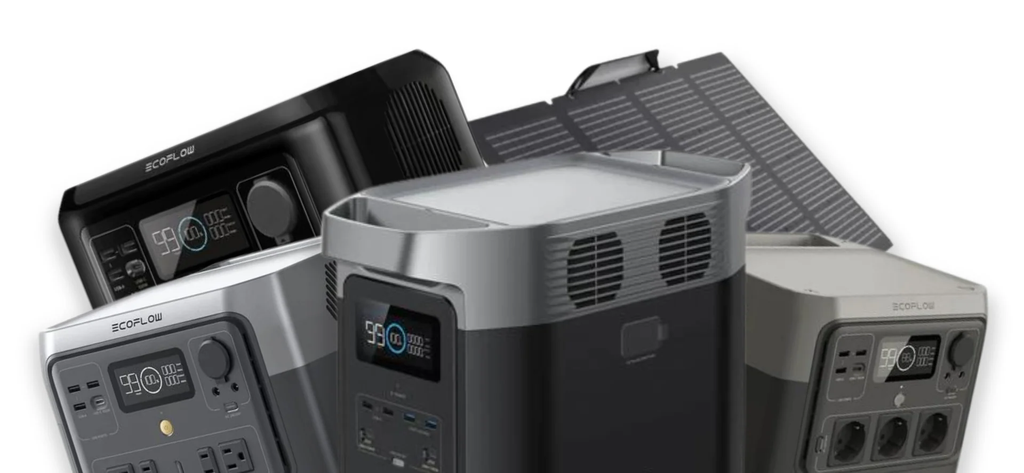
EcoFlow UK offers foldable solar panels designed for outdoor use.
Its lightweight 110W, 160W and 220W models feature adjustable stands and integrated charging cables.
Selected models also use bifacial solar technology, allowing them to capture additional light from the rear surface under suitable conditions.
EcoFlow provides compatible portable power stations and solar generator bundles, including products from its RIVER and DELTA ranges.
These options allow campers to build a setup around their expected electricity requirements.
Protect Your Equipment Outdoors
Outdoor equipment should be handled carefully.
Keep connectors clean and dry, and follow the manufacturer’s weather protection guidance.
Do not assume that every component has the same water resistance rating.
Store panels securely during strong winds and avoid damaging cables.
Power stations should be kept within their recommended operating temperature range and protected from excessive moisture.
Final Thoughts
Portable solar panels can make camping more convenient by providing another way to recharge essential equipment.
Choosing the right setup involves understanding wattage, battery capacity, compatibility and realistic sunlight conditions.
EcoFlow offers portable solar panels and power stations suitable for different outdoor electricity needs.
With thoughtful preparation, solar charging can become a practical part of your next camping adventure.
