
Introduction
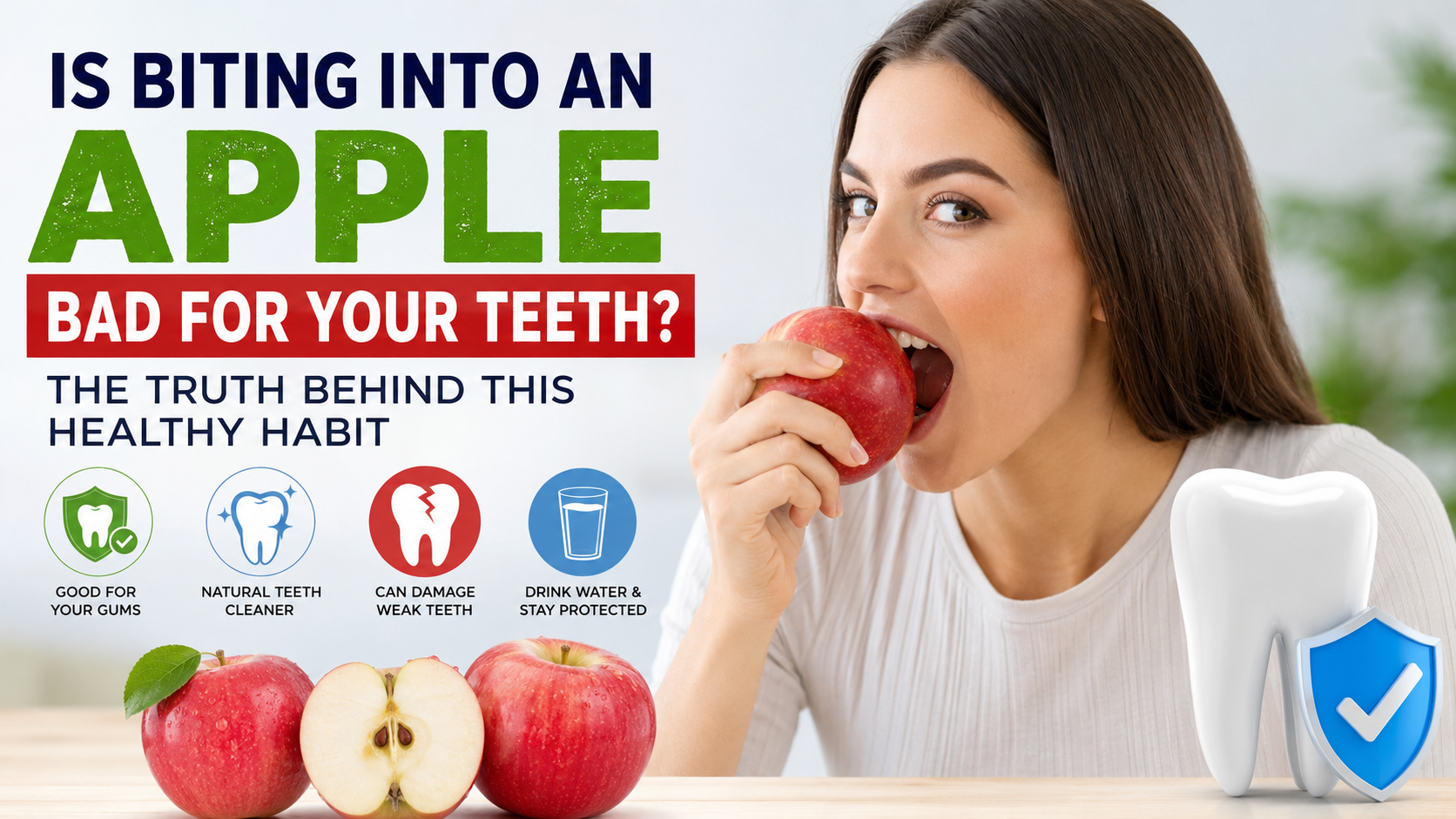
Apples have long been known as one of the healthiest snacks you can eat. They’re packed with fiber, vitamins, antioxidants, and natural sweetness that make them a favorite among both kids and adults. But if you’ve ever wondered, is biting into an apple bad for your teeth, you’re not alone. Some people worry about the hardness of apples damaging their teeth, while others believe apples actually help clean them. The truth lies somewhere in between. Your dental health depends on several factors, including the condition of your teeth, how you eat apples, and your overall oral hygiene. In this guide, we’ll explore the facts, separate myths from reality, and explain how to enjoy apples while protecting your smile.
Why Apples Are Considered Good for Oral Health
Apples offer several benefits for your mouth that go beyond simple nutrition. Unlike sticky candies or sugary snacks, apples contain natural sugars combined with fiber, which helps reduce the impact on your teeth. Their crunchy texture also encourages chewing, increasing saliva production.
Saliva is one of your body’s best natural defenses against tooth decay. It helps wash away food particles, neutralizes acids, and delivers minerals that strengthen tooth enamel. Eating a crisp apple stimulates saliva production much more than softer foods.
Apples are also rich in vitamin C, which supports healthy gums. Healthy gum tissue is essential for keeping your teeth securely in place and reducing the risk of periodontal disease. The antioxidants found in apples may also help reduce inflammation throughout the body, including in your gums.
Another common belief is that apples act like a natural toothbrush. While chewing an apple can remove some food debris from the surface of your teeth, it doesn’t replace brushing or flossing. The cleaning effect is limited, and plaque still needs to be removed with proper oral hygiene.
In short, apples can support oral health when they’re part of a balanced diet and healthy dental routine. They provide nutrients, encourage saliva flow, and offer a healthier alternative to processed snacks.
Can Biting Into an Apple Damage Your Teeth?
Although apples have many health benefits, biting directly into a whole apple isn’t ideal for everyone. If your teeth are healthy and strong, the risk is generally low. However, individuals with existing dental issues should be more cautious.
People with cracked teeth, weakened enamel, large fillings, crowns, veneers, or braces may experience discomfort or even damage when biting into a hard apple. The force required to break through the firm skin and flesh can place pressure on vulnerable teeth.
A weakened tooth may chip, crack, or loosen under stress. Dental restorations such as crowns or fillings can also become damaged if excessive force is applied repeatedly.
Another factor is tooth sensitivity. Those with worn enamel or exposed roots may notice pain when biting into cold or hard apples. This discomfort usually signals that it’s time for a dental checkup rather than avoiding apples altogether.
If you’re unsure whether your teeth can safely handle biting into whole apples, your dentist can evaluate your oral health and provide personalized advice.
Fortunately, there’s a simple solution. Instead of biting directly into the fruit, slice the apple into smaller pieces. This reduces pressure on your front teeth while allowing you to enjoy the same nutritional benefits.
The Role of Apple Acidity and Tooth Enamel
One concern often overlooked is the natural acidity of apples. While they’re much healthier than sugary beverages or candy, apples still contain malic acid and natural fruit acids that can temporarily soften tooth enamel.
When enamel softens after eating acidic foods, brushing immediately afterward may actually cause additional wear because the enamel is more vulnerable. Dentists generally recommend waiting around 30 minutes before brushing after consuming acidic foods.
Drinking water after eating an apple is an easy way to help rinse away sugars and acids while encouraging saliva production. Water also helps return the mouth to a more neutral pH.
Despite their acidity, apples are far less harmful than soft drinks, sports drinks, citrus juices, or sour candies. The fiber in apples slows sugar absorption and requires chewing, which stimulates protective saliva.
Maintaining strong enamel also depends on your daily habits. Brushing twice a day with fluoride toothpaste, flossing daily, and attending regular dental cleanings all help protect enamel from acid attacks.
So while apples are mildly acidic, they are not a major threat to healthy teeth when consumed as part of a balanced diet and followed by good oral care.
Who Should Be Extra Careful When Eating Apples?
Not everyone has the same level of dental health, so some individuals should take extra precautions when eating crunchy fruits.
Older adults may have worn enamel, exposed tooth roots, or multiple dental restorations that make biting into hard foods more challenging. Likewise, children with loose baby teeth might find whole apples difficult to bite.
People undergoing orthodontic treatment with braces should also avoid biting directly into whole apples because the pressure can damage brackets or wires. Cutting apples into thin slices is the safest option.
Individuals recovering from dental procedures such as root canals, implants, crowns, or extractions should follow their dentist’s instructions before eating firm foods.
If you frequently experience tooth pain while chewing apples, don’t ignore it. Pain often indicates an underlying issue such as a cavity, cracked tooth, gum recession, or infection. A dental examination can identify the cause before it becomes more serious.
For those with healthy teeth, apples remain an excellent snack choice. The key is listening to your body and adjusting how you eat them if necessary.
Remember that protecting your teeth isn’t about avoiding healthy foods—it’s about choosing safe eating habits that fit your individual dental condition.
Best Ways to Eat Apples Without Hurting Your Teeth
Enjoying apples safely is easier than many people realize. A few simple habits can significantly reduce the risk of dental problems while allowing you to benefit from their nutrients.
First, slice apples into bite-sized pieces instead of biting into them whole. This distributes chewing pressure across your back teeth, which are designed for grinding food.
Second, pair apples with foods rich in calcium, such as cheese or yogurt. Calcium helps strengthen teeth and can help neutralize acids in the mouth.
Third, drink a glass of water after eating apples. Water washes away leftover sugars and helps restore a healthy balance inside your mouth.
Avoid caramel apples or apples coated in sticky candy. These treats contain large amounts of added sugar that cling to teeth and greatly increase cavity risk.
Continue practicing excellent oral hygiene by brushing twice daily, flossing once a day, and visiting your dentist regularly. Healthy habits matter far more than whether you occasionally bite into a whole apple.
If you wear dentures, crowns, veneers, or braces, ask your dentist for personalized dietary recommendations.
Ultimately, apples remain one of the healthiest snack options available. With just a few adjustments, nearly everyone can enjoy them safely without worrying about unnecessary damage to their teeth.
Conclusion
So, is biting into an apple bad for your teeth? For most people with healthy teeth, the answer is no. Apples provide valuable nutrients, stimulate saliva production, and make an excellent alternative to sugary snacks. However, if you have weakened teeth, dental restorations, braces, or existing oral health problems, biting directly into a whole apple could increase the risk of damage. Cutting apples into slices, drinking water afterward, and maintaining good oral hygiene allow you to enjoy all the benefits while minimizing potential risks. When in doubt, consult your dentist to determine the safest approach for your individual smile.
Frequently Asked Questions (FAQs)
Is biting into an apple bad for your teeth if you have fillings?
It can be if your fillings are old or weakened. Cutting apples into slices is a safer option.
Do apples naturally clean your teeth?
They can remove some food particles and stimulate saliva, but they don’t replace brushing and flossing.
Can apples cause cavities?
Fresh apples contain natural sugars, but they’re much less likely to cause cavities than sugary snacks when eaten as part of a balanced diet.
Should I brush my teeth immediately after eating an apple?
No. Wait about 30 minutes before brushing because the fruit’s natural acids temporarily soften tooth enamel.
Are sliced apples better than whole apples?
Yes, especially for people with braces, crowns, veneers, fillings, or sensitive teeth.
What is the healthiest way to eat apples for dental health?
Eat fresh apple slices, drink water afterward, and continue brushing and flossing regularly.
