
The field of respiratory science stands at an exciting crossroads. Breakthrough technologies are reshaping how researchers study lung diseases, test new therapies, and understand the intricate mechanics of human breathing. From advanced imaging systems to sophisticated laboratory models, these innovations are accelerating discoveries that could save millions of lives.
Respiratory diseases affect over 300 million people worldwide, making research in this field more critical than ever. Traditional methods, while valuable, often fall short of capturing the complex interactions within lung tissue. Modern tools are bridging this gap, offering unprecedented insights into conditions like asthma, COPD, and lung cancer.
Advanced Imaging Technologies
High-Resolution Computed Tomography (HRCT) has revolutionized how scientists visualize lung structures. Unlike standard CT scans, HRCT provides detailed images of small airways and lung tissue, allowing researchers to track disease progression with remarkable precision. This technology enables early detection of subtle changes that might indicate the onset of respiratory conditions.
Optical Coherence Tomography (OCT) represents another leap forward in respiratory imaging. This non-invasive technique uses light waves to create cross-sectional images of lung tissue, similar to how ultrasound uses sound waves. OCT can capture real-time images of airways during breathing, providing dynamic insights into lung function that static images simply cannot offer.
Hyperpolarized Gas MRI uses specially prepared gases like helium-3 or xenon-129 to visualize air distribution within the lungs. Patients inhale these harmless gases, which then appear bright on MRI scans, revealing how air moves through different lung regions. This technique has proven invaluable for studying ventilation patterns and identifying areas of poor lung function.
Laboratory Innovations
3D Bioprinting is creating new possibilities for respiratory research. Scientists can now print lung tissue constructs that mimic the structure and function of human airways. These printed models allow researchers to test drug responses and study disease mechanisms in environments that closely resemble actual human tissue.
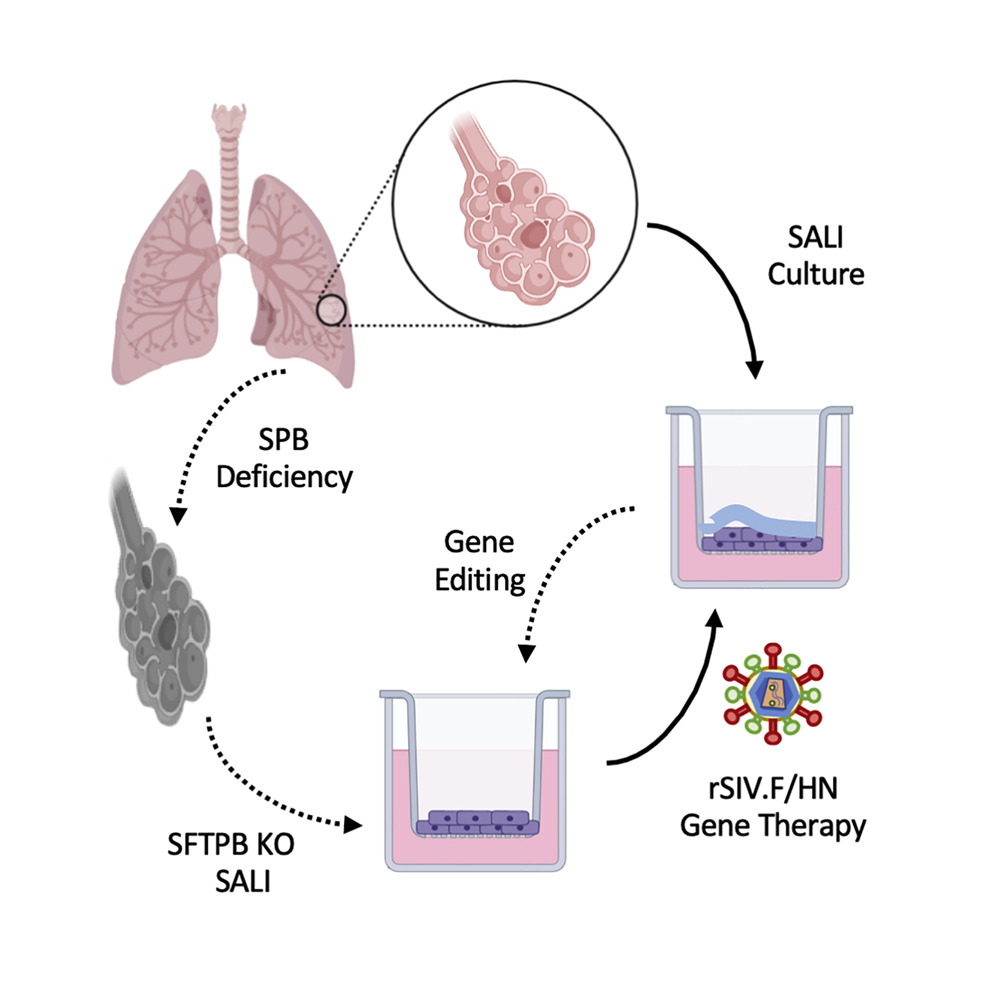
The air-liquid interface lung model represents a significant advancement in laboratory research techniques. This innovative system recreates the natural environment where lung cells meet air on one side and tissue fluid on the other. Researchers can expose these models to various pollutants, pathogens, or potential treatments while observing cellular responses in real-time.
Organ-on-a-chip technology miniaturizes entire lung functions onto microfluidic devices. These “lung chips” contain human lung cells arranged to simulate breathing patterns, complete with mechanical stretching that mimics inhalation and exhalation. The technology allows researchers to study lung diseases and test treatments with greater accuracy than traditional cell cultures.
Computational Breakthroughs
Artificial Intelligence and Machine Learning are transforming how researchers analyze respiratory data. AI algorithms can process thousands of lung scans in minutes, identifying patterns that human eyes might miss. These systems are particularly effective at detecting early signs of lung cancer and predicting disease progression.
Computational Fluid Dynamics (CFD) modeling simulates airflow through digital reconstructions of patient airways. Researchers input CT scan data to create detailed 3D models, then use powerful computers to simulate how air moves through these virtual lungs. This approach helps scientists understand how airway shape affects breathing efficiency and drug delivery.
Digital Twins take computational modeling even further. These are virtual replicas of individual patients’ respiratory systems that can predict how specific treatments might work for each person. By combining patient data with advanced algorithms, digital twins could revolutionize personalized respiratory medicine.
Molecular Analysis Tools
Single-cell RNA sequencing allows scientists to examine gene expression in individual lung cells. This technology reveals how different cell types respond to disease or treatment at the molecular level. Researchers can identify previously unknown cell populations and understand how cellular communication breaks down during illness.
CRISPR gene editing is opening new avenues for respiratory research. Scientists can create precise genetic modifications in laboratory models to study how specific genes affect lung development and disease. This tool is also being explored as a potential treatment for genetic respiratory disorders.
Mass spectrometry imaging enables researchers to map the distribution of drugs, proteins, and other molecules throughout lung tissue. This technique provides spatial information about how treatments reach different lung regions and how diseases affect molecular composition.
Looking to the Future
These innovative tools are more than just impressive technology—they’re changing lives. Faster diagnosis means earlier treatment. Better laboratory models lead to safer, more effective drugs. Personalized approaches ensure patients receive treatments most likely to help their specific conditions.
The integration of these technologies promises even greater breakthroughs ahead. Combining AI analysis with advanced imaging, or linking computational models with laboratory experiments, creates research possibilities that were unimaginable just a decade ago.
Breathing New Life Into Research
Respiratory science has entered an era of unprecedented innovation. These cutting-edge tools are not just advancing our understanding of lung diseases—they’re fundamentally changing how we approach respiratory health. As these technologies continue to evolve and integrate, they hold the promise of transforming treatment outcomes for millions of people struggling with breathing difficulties worldwide.
The future of respiratory medicine looks brighter than ever, powered by the remarkable tools driving discovery forward.
