





Introduction
The phrase serpent snake often appears in literature, mythology, and everyday conversation when people describe snakes in a dramatic or symbolic way. While the words “serpent” and “snake” technically refer to the same type of reptile, the term “serpent” usually carries deeper meaning. It’s often used in stories, religious texts, and legends to represent mystery, danger, wisdom, or transformation.
Snakes themselves are fascinating creatures that have existed on Earth for millions of years. With more than 3,000 species worldwide, they play important roles in ecosystems and human culture alike. From ancient myths to modern wildlife studies, the serpent snake continues to capture human curiosity. In this article, we’ll explore what the term means, the differences between “serpent” and “snake,” their symbolism in cultures, types of snakes, and why these reptiles remain so significant in both nature and storytelling.
What Does Serpent Snake Mean?
The term serpent snake is often used to emphasize the mysterious or symbolic nature of snakes. Scientifically speaking, both “serpent” and “snake” refer to the same reptile group—legless, elongated creatures belonging to the suborder Serpentes. However, the words carry slightly different tones in language.
The word snake is commonly used in everyday speech when referring to the animal itself. For example, people might talk about a snake they saw in the wild or a species studied by biologists.
On the other hand, the word serpent tends to appear in:
- Mythology and folklore
- Religious texts
- Poetry and literature
- Symbolic descriptions
Because of this, “serpent” often sounds more dramatic or mysterious. For instance, in ancient stories, a serpent might represent temptation, power, or transformation.
When people use the phrase serpent snake, they’re usually emphasizing the legendary or symbolic qualities associated with snakes. Writers, storytellers, and historians often prefer the word serpent when they want to create a stronger emotional or mythological tone.
So while both words describe the same animal, “serpent” often carries deeper meaning in storytelling and symbolism.
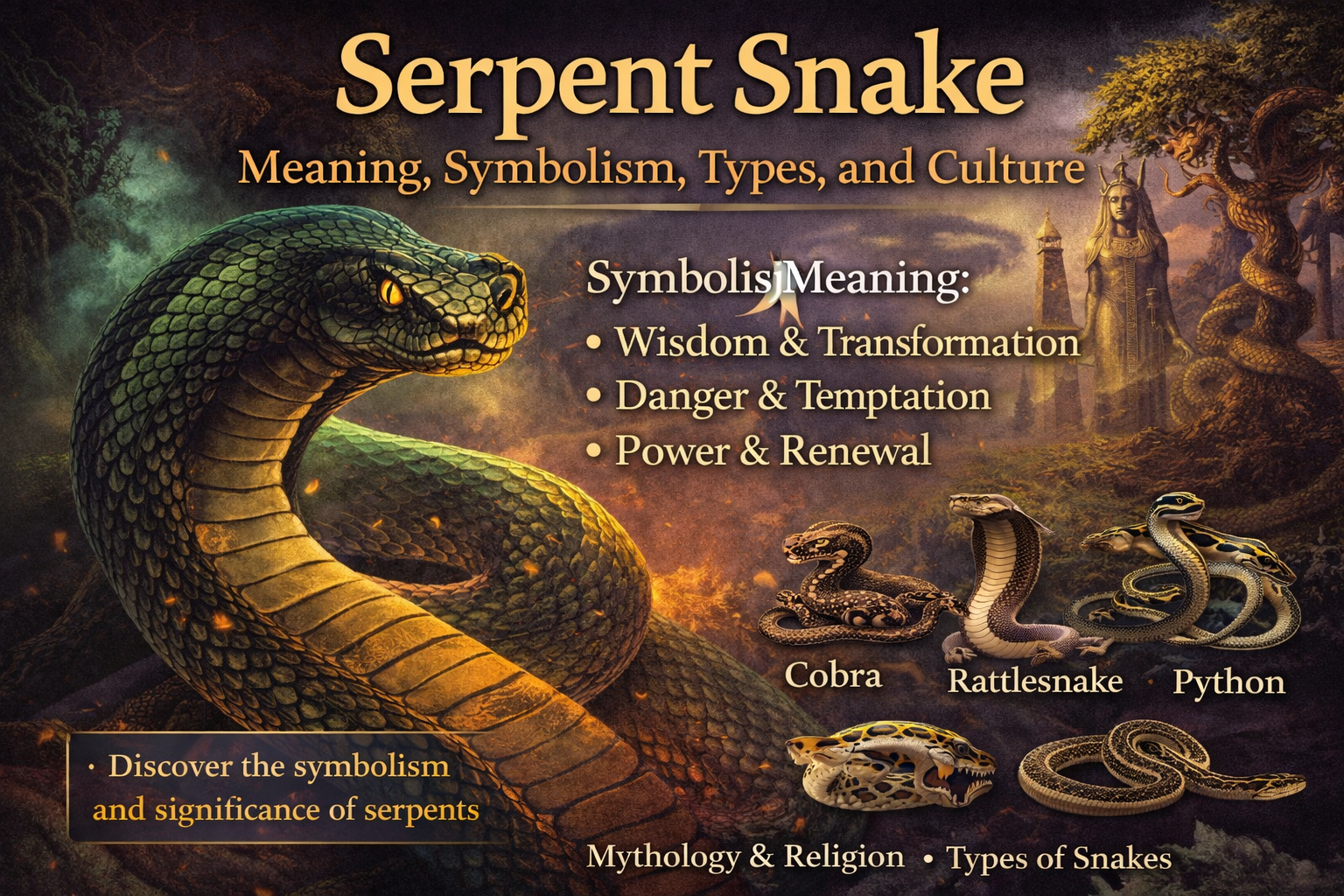
The Symbolism of Serpents in Culture and Mythology
Throughout history, the serpent snake has appeared in myths, legends, and religious traditions around the world. Interestingly, its symbolism can vary widely depending on the culture.
Symbol of Wisdom and Knowledge
In some ancient cultures, serpents represented wisdom and intelligence. For example, many myths depict serpents as guardians of secret knowledge or sacred places.
Symbol of Danger or Evil
In other traditions, serpents symbolize temptation, danger, or deception. One of the most famous examples is the serpent in the biblical story of Adam and Eve, where it represents temptation.
Symbol of Transformation and Renewal
Snakes regularly shed their skin, which has made them powerful symbols of rebirth and transformation. Many ancient cultures saw this process as a sign of renewal and healing.
Symbol of Power
In some civilizations, serpents were linked with kingship or divine power. Mythical serpents often guarded treasures, temples, or sacred objects.
Because of these varied meanings, the serpent snake remains one of the most powerful and complex symbols found in global mythology.
Types of Serpent Snakes Found in Nature
While the word serpent often appears in myths, snakes themselves are very real animals with incredible diversity. Scientists have identified more than 3,000 species of snakes across the globe.
These species are generally divided into two main categories: venomous snakes and non-venomous snakes.
Venomous Snakes
Venomous snakes use toxins to immobilize prey or defend themselves. Some well-known venomous species include:
- Cobras
- Vipers
- Rattlesnakes
- Coral snakes
Their venom can vary in strength, but most snakes only use it for hunting rather than attacking humans.
Non-Venomous Snakes
Non-venomous snakes rely on other methods to capture prey. Many of them are constrictors, meaning they wrap around prey and squeeze until it stops breathing.
Examples include:
- Pythons
- Boas
- Garter snakes
- Corn snakes
Most snake species are actually harmless to humans and play an important role in controlling rodent populations.
So while the term serpent snake might sound mysterious or mythical, these animals are essential parts of real ecosystems.
The Role of Snakes in Nature and Ecosystems
Beyond their symbolism, serpent snake species play a crucial role in maintaining ecological balance. Snakes are both predators and prey, making them important members of many food chains.
Controlling Pest Populations
One of the most valuable roles snakes play is controlling populations of rodents and other small animals. Without snakes, pests such as mice and rats could multiply rapidly and damage crops.
Supporting Biodiversity
Snakes also serve as food for larger predators like birds of prey, mammals, and even other reptiles. This helps maintain balanced ecosystems.
Indicators of Environmental Health
Scientists often study snake populations to understand the health of an ecosystem. Because snakes are sensitive to environmental changes, their presence or absence can reveal important ecological shifts.
Unfortunately, many snake species face threats from habitat destruction, climate change, and human fear. Misunderstandings about snakes often lead to unnecessary harm to these beneficial animals.
Learning about the true nature of the serpent snake can help people appreciate their role in the environment and reduce fear based on myths.
Serpent Snakes in Literature and Modern Media
The serpent snake has also remained a powerful image in literature, films, and modern storytelling. Writers frequently use serpents to symbolize mystery, danger, or hidden knowledge.
In fantasy stories, serpents often appear as:
- Ancient guardians
- Magical creatures
- Powerful monsters
- Symbols of transformation
Poets and novelists also use serpent imagery to create vivid descriptions. A winding river might be described as “a silver serpent,” or a twisting road might be compared to a snake.
Even in modern movies and video games, serpents appear as fascinating characters or creatures. Their unique movement, mysterious reputation, and symbolic meanings make them perfect elements for storytelling.
Because of this, the serpent snake continues to inspire creative works across many forms of media.
Conclusion
The serpent snake is far more than just a reptile—it’s a symbol deeply rooted in human history, culture, and storytelling. While “snake” refers to the animal itself, the word “serpent” often carries powerful meanings linked to mythology, wisdom, danger, and transformation.
From ancient legends to modern science, snakes have fascinated people for centuries. They play vital roles in ecosystems by controlling pests and supporting biodiversity. At the same time, their mysterious appearance and behaviors have inspired countless myths, stories, and symbols.
By understanding both the scientific and cultural aspects of the serpent snake, we gain a deeper appreciation for these remarkable creatures and their lasting influence on human imagination.
FAQs
What is the difference between a serpent and a snake?
There is no biological difference. “Snake” is the scientific term, while “serpent” is often used in literature, mythology, and symbolic descriptions.
Are all serpent snakes venomous?
No. Most snake species are non-venomous and harmless to humans.
Why are serpents important in mythology?
Serpents symbolize many ideas, including wisdom, transformation, danger, and power, which is why they appear frequently in myths and legends.
How many species of snakes exist?
Scientists estimate there are more than 3,000 species of snakes worldwide.
Why do snakes shed their skin?
Snakes shed their skin to grow and remove parasites. This process has also made them symbols of renewal and rebirth in many cultures.


