





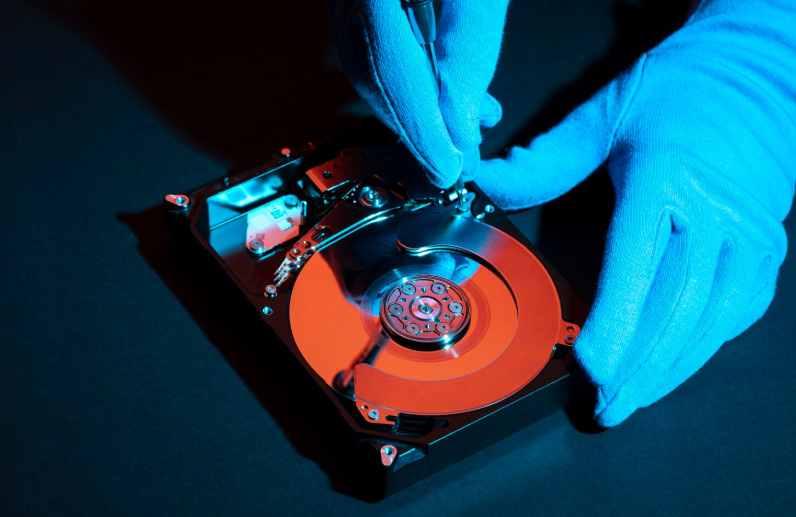
In today’s digital world, data security is more important than ever. All computers, laptops, servers, and storage devices have important information on them that may be of serious concern if it gets into the wrong hands. It’s not enough to just delete files to ensure sensitive data is protected, whether you’re upgrading IT equipment or getting rid of an old computer.
This is where secure hard drive destruction and disposal services in the UK are important. These services guarantee that confidential information is completely wiped and support businesses and people in complying with data protection policies and eco-friendly policies.
What Is Hard Drive Destruction?
Hard drive destruction means completely removing data from a hard disk drive (HDD), solid-state drive (SSD), server drive, USB drive, or other storage medium. The aim is to make it impossible to retrieve any information. Professional destruction services generally employ techniques including shredding, crushing, degaussing, or certified data erasure, depending on the kind of storage device desired and security needs.
As opposed to regular file removal or formatting, professional destruction makes sure that sensitive information can not be accessed by others.
Why Deleting Files Is Not Enough
When users remove files or factory reset their device, they assume that it is gone forever. Sadly, this is a misconception. The OS may delete a reference to the file’s data, but not the data itself, if the file is deleted. Some deleted files can be recovered with special software. Under some conditions, even formatted drives can have recoverable information. Professional destruction services are specially made to eliminate this risk.
Why Secure Hard Drive Disposal Matters
Protecting Sensitive Information
Hard drives often contain:
- Customer records
- Financial documents
- Employee information
- Medical records
- Business contracts
- Login credentials
- Personal photos and files
When these devices are disposed of incorrectly, the information could fall into the wrong hands, giving rise to identity theft, fraud or data breaches.
Maintaining Customer Trust
A data breach can be detrimental to a company’s reputation. Businesses have information expectations that must be met. Secure destruction represents an attitude of safeguarding sensitive data.
Avoiding Legal Consequences
If an organization does not take precautions with personal information, it can get into legal trouble and face penalties for lack of compliance. These risks are decreased by secure hard drive destruction.
UK Regulations and Compliance
GDPR Compliance
The General Data Protection Regulation (GDPR) in the UK also codifies a requirement for organisations to protect personal data all the way through its lifecycle, including at the end of its life. If data-bearing devices aren’t disposed of properly, businesses run the risk of compliance problems and fines. Professional destruction services assist organizations in representing responsible procedures for data handling.
WEEE Compliance
The WEEE Regulations encourage recycling and disposal of electronics to be environmentally responsible. Secure hard drive destruction and sustainable recycling practices are often integrated to make hard drive disposal in the UK sustainable.
ISO Standards
Many reputable destruction providers operate according to recognized standards such as:
- ISO 27001
- NIST 800-88
- BS EN 15713
- Cyber Essentials frameworks
These standards provide for secure and auditable destruction processes. There are common ways of destroying CDs.These are the most common ways to destroy a CD.
Common Hard Drive Destruction Methods
1. Hard Drive Shredding
One of the safest disposal options is to shred. Industrial shredders can crush hard drives into shreds, rendering any data on them unrecoverable. This method is commonly used for highly sensitive information.
2. Hard Drive Crushing
In crushing, specially designed equipment uses a great amount of force to break through a drive, harming the inner platters and storage gears. The result is the destruction of the media and the loss of access to the data.
3. Degaussing
In the degaussing process, powerful magnetic fields are used to wipe out data from magnetic media. This way is typically employed for conventional hard drives, and it’s rarely effective for SSDs.
4. Certified Data Erasure
Certified data wiping could be an appropriate option for drives that are going to be reused or resold. Professional software can overwrite existing data, which is very difficult to recover, but still maintain the function of the device, according to recognized standards.
Final Thoughts
Hard drive destruction and disposal services are crucial for data security in today’s world. Deleting files is no longer effective in protecting sensitive data, whether it is a single laptop or a whole IT environment.
Professional destruction services offer secure handling, certified destruction techniques, regulatory compliance, and environmentally friendly recycling. Selecting a reputable UK data recovery firm allows companies and individuals to avoid any potential risks to data recovery and meet GDPR and other sector standards.
Securing the destruction of your hard drive is not simply about disposing of your old hardware; it’s about safeguarding your information, your reputation, and your future.
FAQs
Should files be deleted before disposing a hard drive?
Yes. There is software that can recover deleted files. Professional destruction means that you are not able to get the data back.
How to properly destroy a hard drive?
Physical shredding is one of the most secure methods in general, as it is able to destroy the storage media.
Does hard drive destruction service conform to GDPR?
Various providers in the UK can provide GDPR compliant destruction processes and will even offer documentation that meets the GDPR requirements.
Is it possible to safely destroy SSDs?
Yes. SSDs can be destroyed by shredding, crushing, or any specialized secure erase method for flash memory devices.
What does Certificate of Destruction mean?
A Certificate of Destruction is a document that states that a Storage Device has been destroyed securely in accordance with the approved method.


