




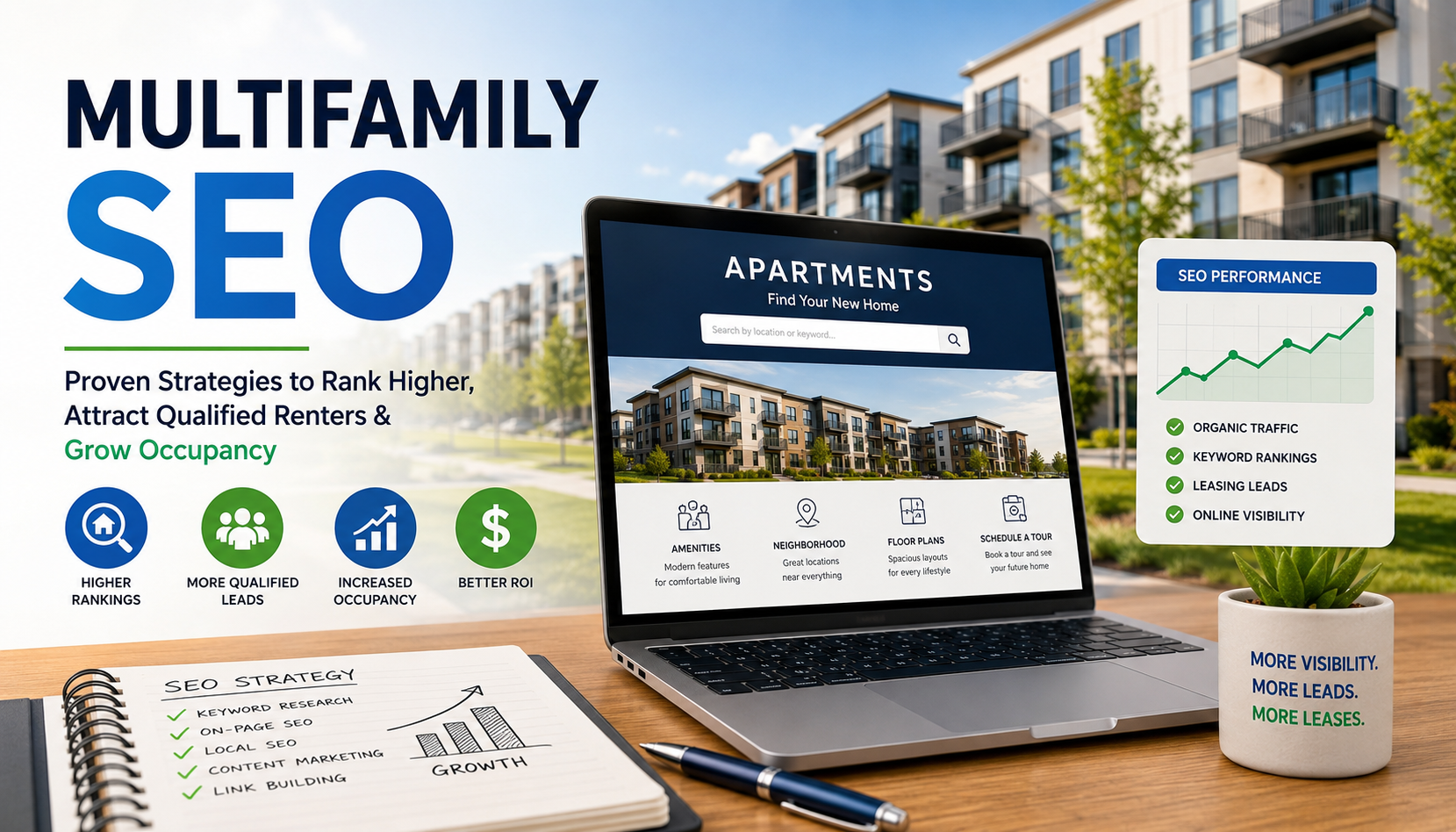
Finding qualified renters is more competitive than ever. Most people begin their apartment search online, comparing communities, reading reviews, and browsing photos before scheduling a tour. If your property doesn’t appear near the top of search results, you’re likely missing valuable leasing opportunities. That’s where multifamily SEO comes in.
Multifamily SEO is the process of optimizing your apartment website and online presence so it ranks higher on search engines like Google. A strong SEO strategy helps property managers, real estate investors, and multifamily marketing teams attract high-intent renters without relying solely on paid advertising. In this guide, you’ll learn how multifamily SEO works, why it’s essential for occupancy growth, and the strategies that can help your apartment community stand out in a crowded market.
Why Multifamily SEO Matters for Apartment Communities
The apartment rental journey has changed dramatically over the past decade. Today’s renters research neighborhoods, compare amenities, check reviews, and even take virtual tours before contacting a leasing office. If your website isn’t visible during that search, competitors will capture those potential tenants first.
Unlike paid advertising, SEO continues delivering results over time. While pay-per-click campaigns stop generating traffic once the budget runs out, well-optimized content can bring qualified visitors for months or even years.
Multifamily SEO also attracts renters with strong purchase intent. Someone searching for “luxury apartments near downtown,” “pet-friendly apartments,” or “2-bedroom apartments with parking” is already looking for a place to live. Ranking for these keywords places your property in front of motivated prospects.
Another major benefit is increased trust. Users naturally associate higher Google rankings with reputable businesses. When your apartment community appears on the first page, potential renters are more likely to view it as a credible option.
SEO also improves the user experience. Faster loading pages, mobile-friendly designs, accurate property information, and helpful content all contribute to better rankings while making it easier for visitors to schedule tours or submit applications.
For property management companies overseeing multiple communities, multifamily SEO creates a scalable marketing strategy that consistently supports occupancy goals across different markets.
Keyword Research and Content Strategy for Multifamily SEO
Successful multifamily SEO starts with understanding what prospective renters are searching for. Keyword research reveals the exact phrases your target audience uses, allowing you to create content that answers their questions.
Begin with primary keywords like:
- Multifamily SEO
- Apartment SEO
- Apartment marketing
- Property management SEO
- Multifamily marketing
Then expand into long-tail keywords such as:
- Luxury apartments in Dallas
- Pet-friendly apartments near me
- Student apartments with parking
- Affordable apartments downtown
- Best apartment communities in Chicago
Long-tail keywords often have lower competition and attract highly qualified visitors.
After identifying your keywords, create valuable content around them. Instead of only publishing property pages, develop resources that renters actually find useful.
Examples include:
- Neighborhood guides
- Moving checklists
- Apartment decorating ideas
- First-time renter tips
- Pet policies explained
- Local attractions near your community
Fresh content signals to search engines that your website remains active and relevant. It also increases opportunities to rank for additional search terms.
Avoid keyword stuffing. Instead, naturally incorporate your focus keyword and related phrases throughout headings, body text, image alt tags, and meta descriptions.
Publishing consistent, helpful content positions your property as an authority while improving organic visibility over time.
On-Page SEO Best Practices for Apartment Websites
On-page SEO ensures every page communicates clearly with both users and search engines. Even great content may struggle to rank if technical elements aren’t properly optimized.
Start with compelling title tags that include your target keyword and location whenever appropriate. Meta descriptions should encourage users to click while summarizing the page.
Use descriptive H1, H2, and H3 headings to organize information logically. This improves readability while helping Google understand page structure.
Image optimization is especially important for apartment websites. High-quality photos attract renters, but large files can slow loading speeds. Compress images and include descriptive alt text such as “modern two-bedroom apartment with balcony.”
Internal linking strengthens SEO by connecting related pages. Link blog posts to available floor plans, amenities pages, neighborhood guides, and contact forms.
Page speed is another ranking factor. Fast-loading websites reduce bounce rates and improve user satisfaction. Optimize code, minimize unnecessary scripts, and use modern image formats whenever possible.
Mobile optimization is equally critical since many apartment searches happen on smartphones. Responsive designs ensure visitors can browse listings, schedule tours, and contact leasing offices without frustration.
Finally, include strong calls to action throughout your pages, encouraging visitors to request pricing, schedule tours, or apply online.
These on-page improvements work together to create a seamless experience that benefits both search engines and prospective renters.
Local SEO Strategies to Increase Apartment Visibility
Local SEO is one of the most powerful aspects of multifamily marketing because renters almost always search within specific cities or neighborhoods.
Start by optimizing your Google Business Profile. Ensure your business name, address, phone number, website, hours, and amenities remain accurate across all platforms.
Encourage satisfied residents to leave reviews. Positive reviews improve local rankings while influencing future renters during their decision-making process.
Location-specific landing pages are another effective strategy. Instead of targeting only broad keywords, create pages optimized for neighborhoods, nearby universities, business districts, or local attractions.
Consistent business information across online directories strengthens local trust signals. Verify listings on apartment directories, business directories, and local chamber websites.
Local backlinks also improve authority. Partner with community organizations, local bloggers, relocation services, and neighborhood publications to earn quality links pointing back to your website.
Adding neighborhood content further strengthens local relevance. Include information about nearby schools, parks, restaurants, shopping centers, public transportation, and entertainment options.
Interactive maps, commute information, and local event guides help renters while improving engagement metrics that support SEO performance.
By combining strong local optimization with quality content, apartment communities become much more visible to nearby renters actively searching for their next home.
Measuring SEO Performance and Long-Term Growth
SEO isn’t a one-time project—it’s an ongoing process that requires monitoring and refinement. Tracking the right metrics helps you understand what’s working and where improvements are needed.
Monitor organic traffic to see how many visitors arrive from search engines. Rising traffic generally indicates improved visibility and successful optimization efforts.
Keyword rankings reveal where your pages appear for important search terms. Focus on both high-volume keywords and long-tail phrases that generate qualified leads.
Track conversions rather than traffic alone. Important metrics include:
- Tour requests
- Contact form submissions
- Phone calls
- Online applications
- Leasing inquiries
These actions directly contribute to occupancy goals.
Google Analytics and Google Search Console provide valuable insights into user behavior, page performance, click-through rates, and technical issues that may affect rankings.
Regular content updates also play an important role. Refresh older articles with new statistics, updated amenities, current photos, and relevant market information to maintain ranking potential.
Competitor analysis helps identify new keyword opportunities and emerging trends within your local apartment market.
The most successful multifamily SEO strategies focus on continuous improvement rather than quick wins. Over time, consistent optimization builds stronger authority, higher rankings, and a steady stream of qualified leasing prospects.
Conclusion
Building a successful apartment marketing strategy requires more than attractive property photos and paid advertising. Multifamily SEO helps apartment communities attract qualified renters through higher search visibility, better user experiences, and valuable content that answers prospective tenants‘ questions. By investing in keyword research, local SEO, technical optimization, and ongoing content creation, property managers can generate sustainable organic traffic and reduce long-term marketing costs. As competition continues to grow, a well-executed multifamily SEO strategy will remain one of the most effective ways to increase occupancy and support lasting business growth.
Frequently Asked Questions
What is multifamily SEO?
Multifamily SEO is the process of optimizing apartment and property management websites to rank higher in search engines and attract more prospective renters.
How long does multifamily SEO take to show results?
Most websites begin seeing measurable improvements within three to six months, depending on competition and the quality of optimization.
Is SEO better than paid advertising?
SEO provides long-term organic traffic, while paid ads generate immediate visibility. Many successful apartment communities use both strategies together.
Why is local SEO important for apartments?
Most renters search within a specific city or neighborhood, making local SEO essential for attracting nearby prospects.
What keywords should apartment websites target?
Target a mix of broad and location-specific keywords such as apartment SEO, luxury apartments, pet-friendly apartments, and neighborhood-based searches.
How often should apartment websites publish new content?
Publishing high-quality content at least two to four times per month helps maintain rankings and attract new visitors consistently.


