





Introduction
Interior design is constantly evolving, reflecting changing lifestyles, technology, and cultural influences. Today’s homeowners want spaces that are not only beautiful but also functional, comfortable, and personal. The latest interior design trends highlight a strong shift toward sustainability, natural materials, and personalized décor. From earthy color palettes to multifunctional furniture, designers are rethinking how homes should look and feel in the modern era.
Whether you’re renovating an entire house or simply refreshing a room, understanding current design directions can help you create a stylish and practical living space. In this guide, we’ll explore the most popular interior design ideas shaping homes today. These trends combine aesthetics with practicality, ensuring your home stays timeless while still feeling fresh and modern.
Sustainable and Eco-Friendly Design
One of the most significant interior design trends shifts in recent years is the move toward sustainability. Modern homeowners are increasingly mindful of their environmental impact, leading to eco-friendly design choices that combine style with responsibility.
Sustainable interior design focuses on materials that are renewable, recycled, or responsibly sourced. For example, bamboo flooring, reclaimed wood furniture, and recycled metal décor are becoming popular alternatives to traditional materials. These choices reduce environmental impact while adding unique character to a space.
Energy efficiency also plays a major role in this trend. LED lighting, energy-efficient appliances, and smart home systems help reduce electricity consumption while enhancing convenience. Many homeowners are also choosing natural fabrics like organic cotton, linen, and wool for furniture and textiles.
Another growing trend is the use of indoor plants. Plants improve air quality, create a relaxing environment, and add vibrant natural elements to interiors. Large statement plants, vertical gardens, and herb walls are increasingly common in modern homes.
Sustainable interior design isn’t just a passing trend—it represents a long-term shift in how people think about their living spaces. By choosing eco-conscious materials and energy-efficient solutions, homeowners can create stylish interiors that are both environmentally friendly and visually appealing.
Warm Earthy Color Palettes
Color plays a powerful role in shaping the mood and atmosphere of a room. One of the most notable interior design trends today is the shift from cool minimal tones to warm earthy palettes inspired by nature.
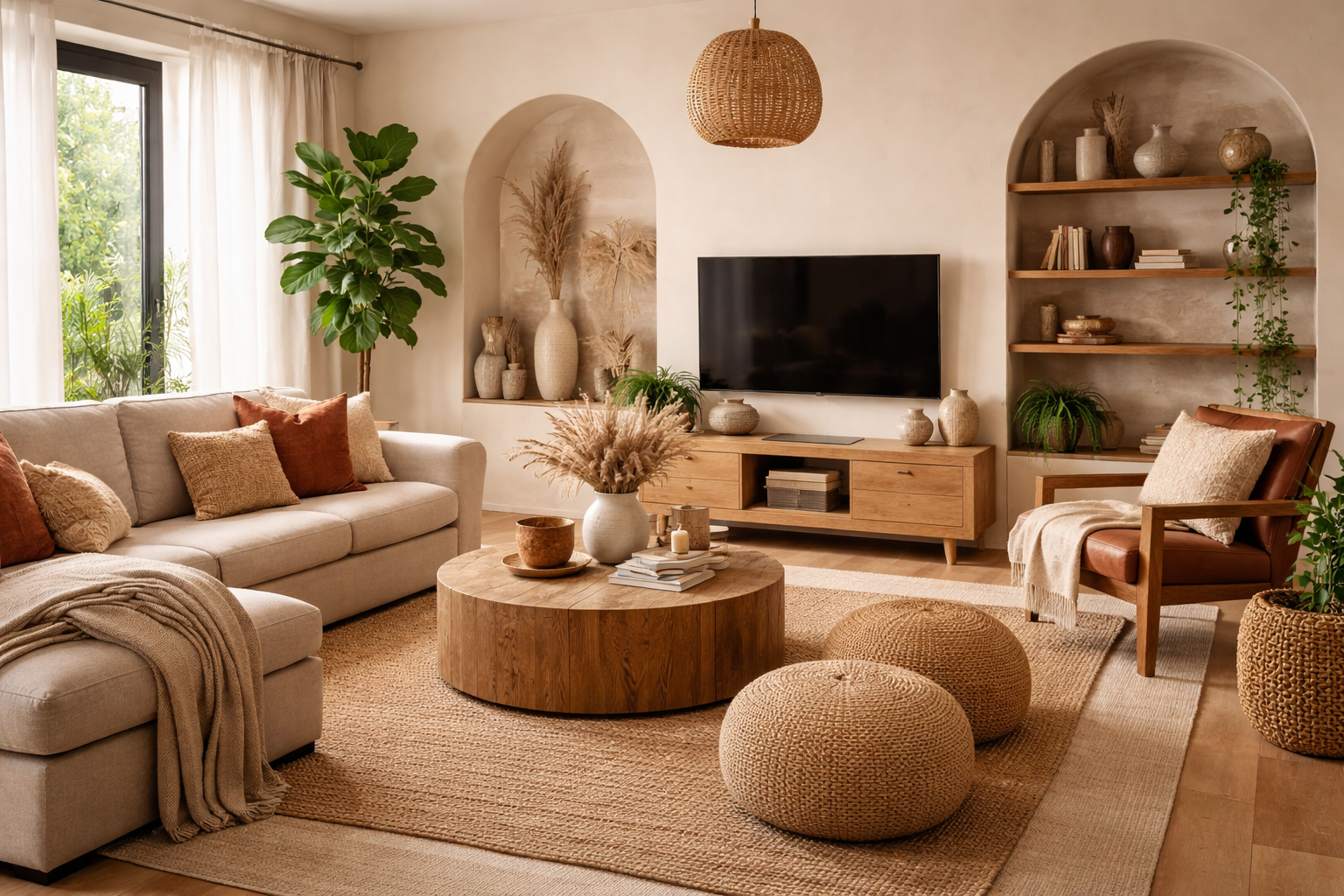
Shades like terracotta, clay, olive green, sand, beige, and warm brown are dominating modern interiors. These colors create a sense of comfort, grounding, and warmth, making spaces feel more inviting and relaxing.
Earth-inspired colors work especially well with natural materials such as wood, stone, and woven textiles. For example, a terracotta accent wall paired with wooden furniture and linen curtains creates a cozy yet sophisticated atmosphere.
Another advantage of earthy tones is their versatility. They blend well with many interior styles, including modern, rustic, bohemian, and Scandinavian design. Homeowners can introduce these colors through wall paint, furniture, rugs, or decorative accessories.
Layering tones is also becoming popular. Designers often combine multiple shades of the same color family to create depth and texture. For instance, mixing beige walls with caramel leather furniture and bronze décor accents can give a room a rich and elegant feel.
These warm color palettes help create spaces that feel calm and welcoming—something many people seek in their homes today.
Multifunctional and Space-Saving Furniture
With urban living spaces becoming smaller, multifunctional furniture has become an essential part of modern interior design. Today’s furniture is designed not only for style but also for flexibility and efficiency.
Multifunctional furniture includes items that serve multiple purposes. Examples include sofa beds, expandable dining tables, storage ottomans, and foldable desks. These pieces allow homeowners to maximize space without sacrificing aesthetics.
For example, a living room can easily transform into a guest bedroom with a stylish sofa bed. Similarly, a coffee table with hidden storage compartments helps reduce clutter while maintaining a clean and organized look.
Modular furniture is another growing trend. These pieces can be rearranged or customized based on the room’s needs. Sectional sofas, adjustable shelving units, and modular storage systems provide flexibility for evolving lifestyles.
Remote work has also influenced furniture design. Home offices are now common, even in small apartments. Compact desks, wall-mounted workstations, and ergonomic chairs help create functional workspaces without taking up too much room.
This focus on practicality ensures that modern homes remain comfortable, organized, and adaptable to different needs.
Natural Materials and Textures
Natural materials are becoming a cornerstone of modern interiors. Many homeowners are moving away from synthetic finishes and embracing materials that bring warmth and authenticity into their homes.
Wood remains one of the most popular elements in contemporary design. Light oak, walnut, and reclaimed wood are commonly used for flooring, furniture, and wall panels. These materials add natural beauty while creating a timeless aesthetic.
Stone surfaces such as marble, granite, and travertine are also gaining popularity. They’re often used in kitchens, bathrooms, and accent walls to create luxurious yet organic spaces.
Texture is equally important in this trend. Designers are layering different materials to add depth and visual interest. For example, a room might combine woven baskets, linen upholstery, wool rugs, and ceramic décor.
Handcrafted items are also making a strong comeback. Handmade pottery, artisan rugs, and handcrafted wooden furniture add personality and uniqueness to interiors.
By incorporating natural materials and tactile textures, homeowners can create spaces that feel warm, authentic, and connected to nature.
Personalized and Statement Décor
Modern interiors are moving away from overly uniform designs and embracing individuality. Personalized décor is becoming a defining feature of today’s interior design trends.
Homeowners now prefer spaces that reflect their personalities, experiences, and interests. This can include displaying travel souvenirs, family heirlooms, custom artwork, or unique collectibles.
Statement pieces are also gaining popularity. Instead of filling rooms with many small decorative items, designers recommend selecting a few bold pieces that draw attention. This might be a large abstract painting, a sculptural light fixture, or a uniquely designed chair.
Gallery walls are another creative way to personalize interiors. Mixing artwork, photographs, and decorative frames can turn a blank wall into a focal point.
Bold lighting is also trending. Oversized pendant lights, artistic chandeliers, and sculptural lamps serve both functional and decorative purposes.
Ultimately, personalized décor ensures that every home feels unique rather than resembling a generic showroom. It allows homeowners to express creativity while maintaining a cohesive design style.
Conclusion
Interior design continues to evolve as lifestyles and priorities change. Today’s interior design trends focus on creating homes that are comfortable, sustainable, and deeply personal. From eco-friendly materials and warm color palettes to multifunctional furniture and natural textures, these design ideas reflect a balance between style and practicality.
The key to successful interior design is choosing trends that align with your lifestyle rather than simply following what’s popular. By incorporating elements that resonate with your preferences, you can create a home that feels both modern and timeless. Whether you’re redesigning an entire house or updating a single room, these trends offer inspiration for building a space that truly feels like home.
FAQs
What are the most popular interior design trends right now?
Some of the most popular trends include sustainable materials, warm earthy colors, multifunctional furniture, natural textures, and personalized décor elements.
How can I update my home without a full renovation?
You can refresh your home by changing paint colors, adding new lighting fixtures, updating textiles like rugs and curtains, and incorporating plants or statement décor pieces.
Are minimalist interiors still popular?
Yes, minimalism is still popular but has evolved into a warmer style often called “warm minimalism,” which combines simple design with natural materials and cozy textures.
How do I choose the right color palette for my home?
Start by considering the mood you want to create. Neutral and earthy tones work well for relaxing spaces, while bold colors can add energy and personality to certain rooms.
What materials are trending in modern interior design?
Natural materials such as wood, stone, linen, rattan, and ceramic are currently trending because they create warm and authentic living environments.


