





Introduction
Have you ever noticed tiny balls of fabric forming on your favorite sweater, hoodie, or t-shirt? Those little fuzz balls are called pills, and they can make even high-quality clothing look old and worn out. Fortunately, learning how to remove pilling from clothes is simple and can help extend the life of your wardrobe.
Pilling occurs when loose fibers rub together during wear and washing, creating small knots on the fabric’s surface. While it’s a common issue, especially with knitwear and blended fabrics, there are several effective ways to remove pills and prevent them from returning. In this guide, you’ll discover practical methods, useful tools, and preventative tips to keep your clothes looking fresh, smooth, and well-maintained.
What Causes Pilling on Clothes?
Before tackling the problem, it’s helpful to understand why pilling happens in the first place. Fabric pills develop when loose fibers become tangled due to friction. Everyday activities such as walking, sitting, washing, and drying can create enough friction to cause fibers to bunch together.
Certain fabrics are more prone to pilling than others. Synthetic materials like polyester, acrylic, and nylon often pill because their fibers are strong enough to remain attached to the fabric even after tangling. Natural fibers such as cotton and wool can also pill, although the pills may break off more easily.
Common areas where pilling appears include:
- Under the arms
- Along sleeves
- On sweater fronts
- Between the thighs of pants
- Around collars and cuffs
Frequent washing, overloading the washing machine, and using harsh detergents can accelerate pilling. Clothes that rub against bags, seat belts, or other garments are also more likely to develop pills.
Understanding the root causes allows you to choose better care techniques and reduce fabric wear over time.
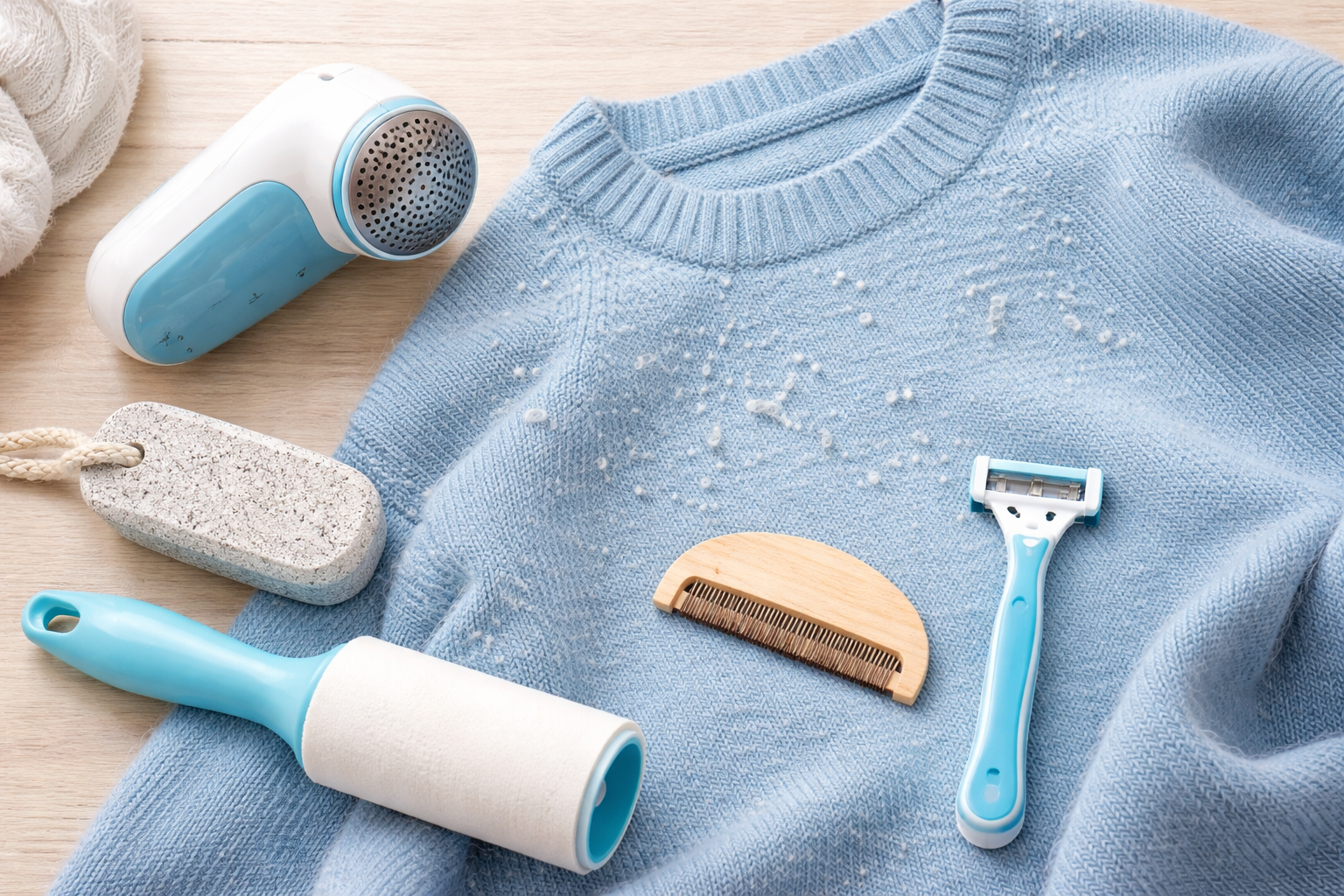
Best Tools for Removing Pilling from Clothes
One of the easiest ways to restore clothing is by using the right tools. Several household and specialty tools can safely remove pills without damaging fabric.
Fabric Shaver
A fabric shaver is one of the most effective solutions. This handheld device gently cuts away pills from the fabric surface while leaving the material intact. Electric fabric shavers work quickly on sweaters, blankets, and knitwear.
Lint Roller
While lint rollers are designed for lint and pet hair, they can help lift loose pills and fuzz from clothing. They’re particularly useful for light pilling.
Sweater Stone
A sweater stone or pumice stone is specially designed to remove pills from wool and knit fabrics. Gently brushing the stone across the fabric helps break away the pills.
Disposable Razor
A clean disposable razor can be used carefully on flat surfaces. Stretch the fabric and lightly shave the pills away. This method requires patience to avoid damaging delicate materials.
Fine-Tooth Comb
A sweater comb can effectively remove larger pills from knitwear. It works by gently pulling the pills away from the fabric surface.
Choosing the right tool depends on the garment type and the severity of pilling.
How to Remove Pilling from Clothes Safely
Now that you know the tools available, let’s look at the safest methods for removing pills.
Start by laying the garment flat on a clean surface. Make sure the fabric is smooth and wrinkle-free. If using a fabric shaver, move it gently across the affected area using light pressure. Avoid pressing too hard, especially on delicate fabrics.
For a razor method:
- Place the garment on a flat surface.
- Pull the fabric tight.
- Lightly glide the razor over the pills.
- Remove loose fibers with a lint roller.
If you’re using a sweater stone or comb, work in one direction rather than scrubbing back and forth. This minimizes stress on the fibers.
After removing the pills, wash the garment according to the care label instructions. Allow it to air dry whenever possible, as excessive dryer heat can contribute to future pilling.
Always test any removal method on a hidden area first, especially for delicate fabrics such as cashmere, silk blends, or fine wool.
How to Prevent Clothes from Pilling
Prevention is often easier than removal. Adopting a few fabric-care habits can significantly reduce pilling.
Turn Clothes Inside Out
Before washing, turn garments inside out. This protects the outer surface from excessive friction during the wash cycle.
Use Gentle Wash Cycles
Select delicate or gentle settings when laundering clothes. Lower agitation means less rubbing between fabrics.
Wash Similar Fabrics Together
Avoid mixing rough materials like denim with delicate knitwear. Heavy fabrics can cause unnecessary friction and fiber damage.
Avoid Overloading the Washer
When clothes are packed too tightly, they rub against each other more aggressively. Giving garments room to move can reduce wear.
Air Dry When Possible
Dryers create significant friction and heat, both of which encourage pilling. Air drying helps preserve fabric quality and extends garment life.
Choose Quality Fabrics
Higher-quality garments with longer fibers are generally less prone to pilling. Investing in well-made clothing can reduce maintenance over time.
These preventative steps can help keep your clothes looking newer for much longer.
Caring for Different Fabrics After Pill Removal
Different fabrics require different care approaches once pills have been removed.
Wool
Wool garments should be washed sparingly and dried flat. Using wool-specific detergents can help maintain fiber integrity.
Cotton
Cotton is relatively durable but can still develop pills. Washing in cold water and avoiding high heat drying can help reduce future pilling.
Cashmere
Cashmere naturally pills during early wear. Use a cashmere comb and store garments folded rather than hanging to prevent stretching.
Polyester Blends
Synthetic blends often pill because the fibers are strong and resistant to breaking. Fabric shavers are usually the best removal option for these materials.
Fleece
Fleece can attract lint and develop surface fuzz. Wash fleece garments separately and avoid fabric softeners, which can affect fiber texture.
Understanding your fabric type helps you choose the safest maintenance routine and preserve the garment’s appearance.
Conclusion
Learning how to remove pilling from clothes can make a noticeable difference in the appearance and longevity of your wardrobe. Whether you use a fabric shaver, sweater stone, razor, or comb, removing pills is a simple process that restores clothing to a cleaner, more polished look. More importantly, adopting preventive care habits such as gentle washing, air drying, and proper fabric handling can minimize future pilling. With regular maintenance and the right tools, you can keep sweaters, shirts, jackets, and other garments looking fresh, comfortable, and stylish for years to come.
FAQs
What is the fastest way to remove pilling from clothes?
A fabric shaver is generally the fastest and most effective tool for removing pills from most fabrics.
Can I use a razor to remove fabric pills?
Yes, but use a clean disposable razor carefully and avoid delicate fabrics that may snag easily.
Does washing clothes cause pilling?
Frequent washing, especially with rough fabrics or harsh cycles, can contribute to pilling due to friction.
Can pilling be prevented completely?
While pilling cannot always be prevented, proper washing, drying, and fabric care can significantly reduce it.
Which fabrics pill the most?
Polyester, acrylic, wool blends, and fleece are among the fabrics most likely to develop pills over time.
Is pilling a sign of poor-quality clothing?
Not always. Even premium fabrics such as cashmere and wool can pill due to normal wear and friction.


