




Most people buy a portable power station for one job: a camping weekend, a campervan trip, or a power cut at home. Then the job grows. A fridge gets added, a laptop turns into a work setup, and suddenly the battery that looked generous in the shop runs flat before lunch. The better approach is to pick a model that can grow with you.
That is the idea behind the EcoFlow DELTA 3 Series. The brand sells the DELTA 3 and the DELTA 3 Plus as expandable stations, with a Smart Extra Battery, solar bundles and several ways to recharge. This guide explains each upgrade, what EcoFlow says about it, and how to work out how much capacity you need. You can see the whole range on the EcoFlow UK site.
In this guide
The DELTA 3 Series in Short
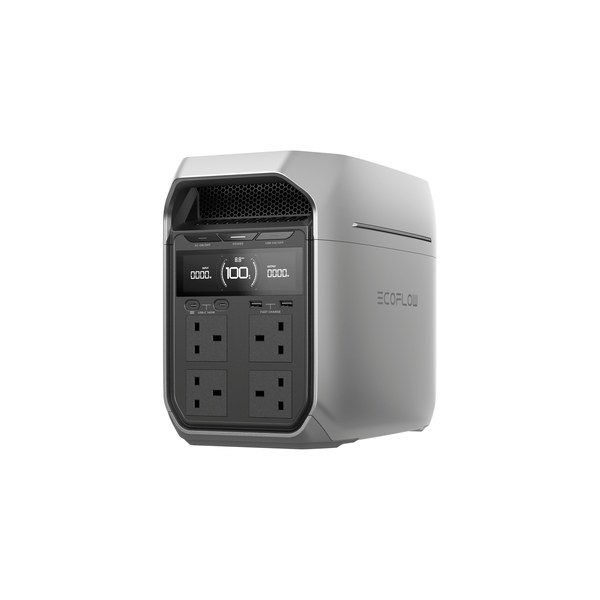
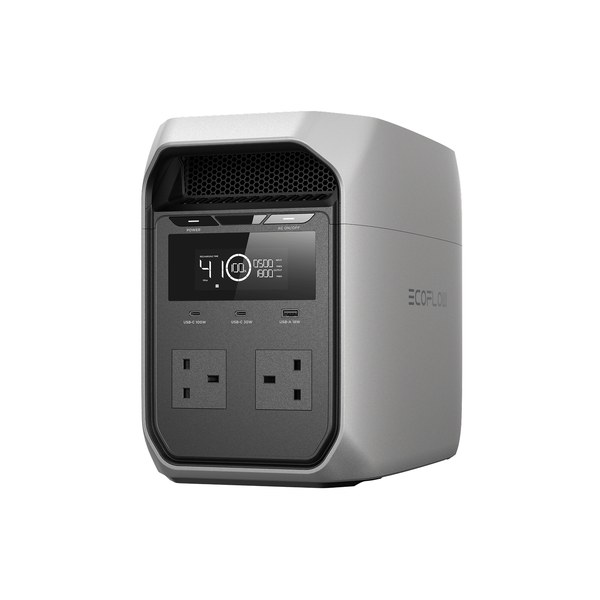
EcoFlow lists three related models in this range: the DELTA 3 Classic (1024 Wh), the DELTA 3 and the DELTA 3 Plus. The Classic is the compact entry point. The DELTA 3 Series page describes expandable capacity of 1 to 5 kWh, using a DELTA 3 Extra Battery or other EcoFlow extra batteries, 1800 W of AC output (2400 W with X-Boost, 3600 W surge), five fast charging methods and a 5-year warranty.

| Item | What EcoFlow says | Why it matters |
|---|---|---|
| DELTA 3 Classic (1024 Wh) | 1800 W output, 3600 W surge, 0 to 80 percent AC charging in 45 minutes, up to 5-year warranty with app registration | A compact station for weekends and small setups |
| DELTA 3 Series station | Expandable 1 to 5 kWh, 1800 W AC output (2400 W with X-Boost), 5-year warranty | The base unit if you expect to add capacity later |
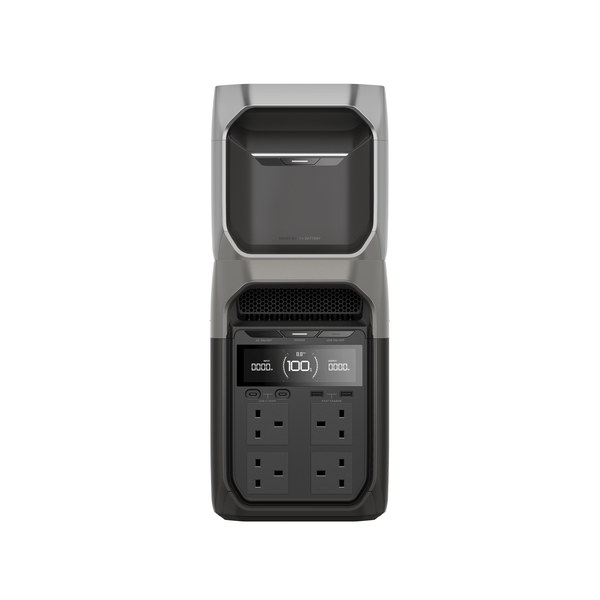
| DELTA 3 Smart Extra Battery | Adds 1024 Wh, 4000+ cycles, plug-and-play, 5-year warranty | Doubles the capacity of a 1024 Wh station |
| 220 W bifacial solar panel | Up to 23 percent conversion, 24 months warranty on the panel | Lets you recharge away from the mains |
The model names are close to each other, so always check which unit a bundle includes before you pay. EcoFlow’s DELTA 3 Series product page lists variants such as DELTA 3 Plus with no accessory, with a Smart Extra Battery, with a 220 W panel or with an alternator charger.
Step One: The Smart Extra Battery
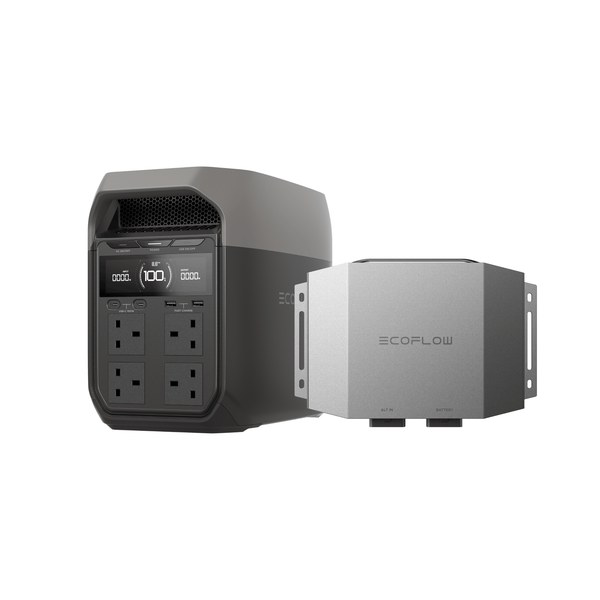
The simplest upgrade is the DELTA 3 Series Smart Extra Battery. EcoFlow says it increases the capacity of a DELTA 3 Plus or DELTA 3 by an extra 1024 Wh. It is built on LFP battery chemistry, and the brand claims 10 years of daily use until it reaches 80 percent of its original capacity, with more than 4000 charging cycles.
It is described as plug-and-play, and you monitor and control it through the EcoFlow app. The listed dimensions are 398 x 200 x 198 mm and the weight is 9.6 kg. It also carries the 5-year warranty that EcoFlow advertises for the series.
A Simple Capacity Example
Battery capacity is measured in watt-hours (Wh). A rough runtime is capacity divided by the power your device draws, minus losses. The numbers below are an illustration, not a promise from EcoFlow, and real runtimes will be lower because of inverter losses, temperature and the way your devices cycle on and off.
- 1024 Wh station, 50 W fridge average: about 20 hours in theory.
- 2048 Wh with one extra battery, same fridge: about 40 hours in theory.
- 2048 Wh, a 60 W laptop plus a 50 W fridge: about 18 hours in theory.
- A 1500 W kettle: the station must support the load, and the battery drains quickly, so use high-power items sparingly.
Work out the watts of your own devices from their labels, estimate the hours per day, and add a margin of 20 to 30 percent. That tells you whether the Classic is enough or whether you should start with the expandable series.
Step Two: Add Solar
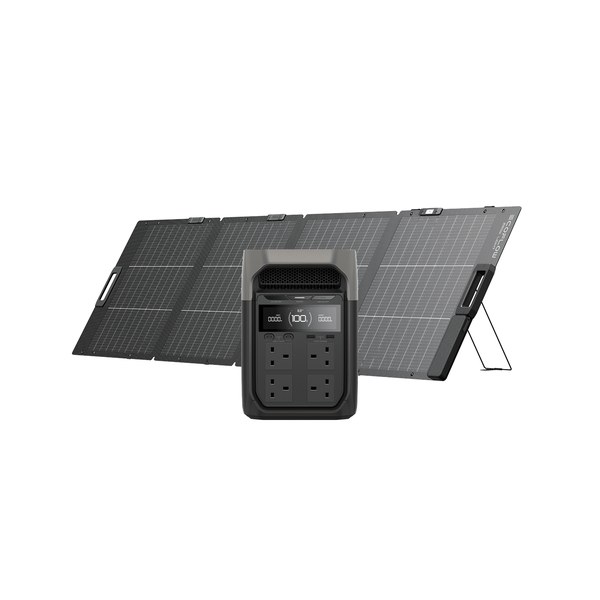
A bigger battery is useless if you cannot refill it. EcoFlow sells the DELTA 3 Series in solar generator bundles, which pair the station with panels. The series page lists a 220 W bifacial panel, and the brand states that the solar generator offers 99 percent MPPT efficiency and up to 23 percent panel conversion.
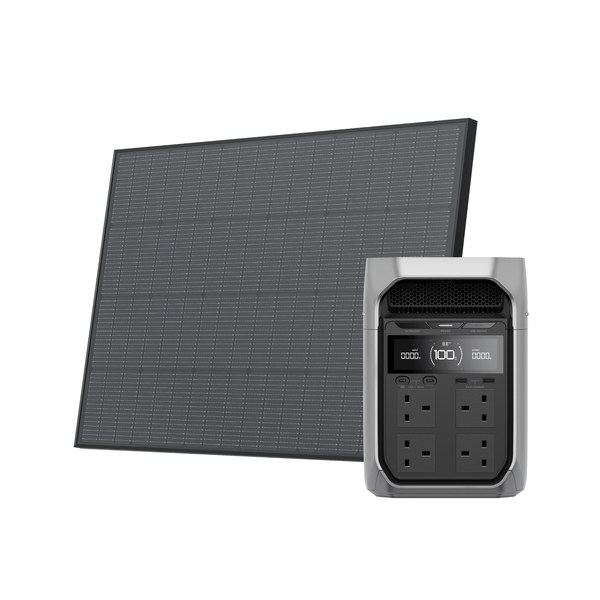
The product page notes that the DELTA 3 Plus has a 5-year warranty, while the 220 W bifacial portable solar panel has 24 months. Bundles are offered with one to four 220 W panels depending on the model, and EcoFlow also lists a rigid 175 W panel in a separate bundle.
Panels need sun. In the UK, an overcast day can cut output a great deal, so do not assume that two panels will fully recharge a large battery in a few hours. If your plans depend on solar, give yourself a larger margin.
Step Three: Pick Your Charging Methods
The DELTA 3 Series page advertises five ways to recharge: AC, solar, an 800 W alternator charger, the EcoFlow Smart Generator 3000 (dual fuel) and multi-charging. The Classic page lists AC charging from 0 to 80 percent in 45 minutes.
- AC (mains): the fastest option at home or on a campsite with a hook-up.
- Solar: quiet and free, but slow and weather dependent.
- Alternator charger: useful for vans, because the engine does the work while you drive.
- Generator: a backup for long outages when the weather is bad.
Which Setup Fits You?
- Weekend camping: the DELTA 3 Classic is often enough, and solar is optional.
- Campervan or longer trips: an expandable DELTA 3 with an alternator charger and panels.
- Home backup: look at the series with an extra battery, and check the emergency switching details on EcoFlow’s page.
- Remote working: match capacity to the laptop, router and lights you actually use.
Questions to Ask Before You Buy
- Do my devices exceed the 1800 W rating, even for a short time?
- Will I want more capacity within a year or two?
- How will I recharge on a long trip?
- Does the bundle include every cable I need?
Prices change often, and EcoFlow runs promotions, so check the current offer rather than relying on any figure in an article. Compare the DELTA 3 variants on the EcoFlow DELTA 3 page and decide whether an extra battery or a panel is the better first upgrade.
Whichever you choose, write down your device list first. A short list of watts and hours is the best way to avoid buying too small, or paying for capacity you never use. When you are ready, open the EcoFlow store and filter by the DELTA 3 Series.
Specifications were taken from EcoFlow’s UK website on 26 October 2026 and may change. Runtime examples are illustrations only. Some links in this article are affiliate links, which means we may earn a commission at no extra cost to you.


