





Introduction
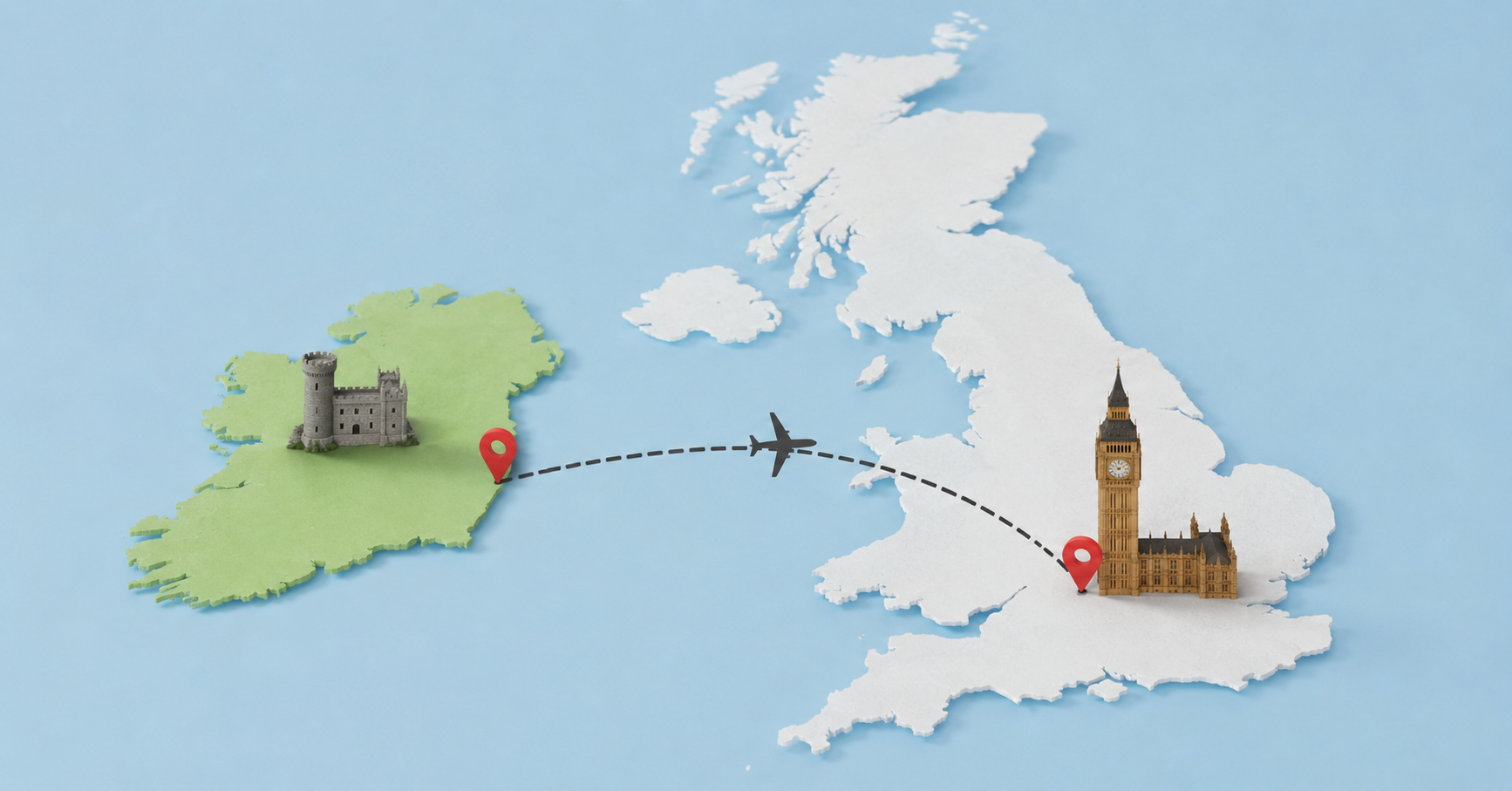
If you’re planning a trip between England and Ireland, one of the first questions you might have is how far is Ireland from London? Although Ireland is relatively close to the UK, the actual distance depends on which part of Ireland you’re visiting and how you travel. Dublin, for example, is considerably closer to London than destinations such as Cork, Galway, or the western coast. The journey can also feel very different depending on whether you choose to fly, take a ferry, or combine rail and sea travel. Fortunately, getting from London to Ireland is fairly straightforward, with regular flights and ferry connections available throughout the year. In this guide, we’ll look at the approximate distances, travel times, routes, and practical considerations to help you choose the best option.
How Far Is Ireland From London by Distance?
The distance between London and Ireland varies because Ireland is a whole country rather than a single destination. For most travelers, Dublin is the main point of comparison because it’s Ireland’s capital and one of the easiest Irish cities to reach from London.
The straight-line distance from London to Dublin is roughly 290–300 miles (465–485 kilometers). That’s the approximate air distance between the two cities. The actual distance traveled will depend on your route and method of transportation.
Ireland’s location across the Irish Sea makes it geographically close to Great Britain. At its nearest points, Britain and Ireland are separated by only a relatively short stretch of sea. However, London is located in southeastern England, so travelers still need to cross a significant portion of England before reaching a port or airport.
The distance also changes depending on your Irish destination. London to Cork is roughly 350 miles (560 kilometers) as the crow flies, while London to Galway is approximately 410 miles (660 kilometers). Destinations farther west or north can be considerably farther away.
It’s worth remembering that distance doesn’t always equal travel time. A short flight between London and Dublin can take around an hour and a half in the air, but the total journey is longer once airport transfers, security, check-in, and baggage collection are included.
For this reason, it’s useful to consider both geographical distance and door-to-door travel time when planning your journey.
How Long Is the Flight From London to Ireland?
Flying is generally the quickest way to travel from London to Ireland. Several London-area airports offer flights to Irish destinations, including Dublin, Cork, Shannon, and other regional airports.
A direct London to Dublin flight usually takes around 1 hour 20 minutes to 1 hour 30 minutes, although the exact time can vary depending on the airline, aircraft, weather, and air traffic. Despite the short flying time, you’ll want to allow additional time for getting to the airport and completing airport procedures.
London has several major airports, including Heathrow, Gatwick, Stansted, Luton, and London City. The best airport for your journey will depend on your airline, departure time, and location in London.
Dublin is particularly convenient for travelers because of its strong connections with London. If you’re heading to another Irish city, you can sometimes fly directly there or travel onward from Dublin.
When comparing flights, don’t focus solely on the advertised flight duration. A flight leaving from an airport two hours away from your accommodation may be less convenient than one from a closer airport, even if the time in the air is identical.
You should also factor in check-in requirements, airport security, baggage collection, and transportation after landing. For a short international trip, these extra stages can make a noticeable difference.
Still, if your priority is speed, flying is usually the most practical London to Ireland travel option.
Can You Travel From London to Ireland by Ferry?
Yes, you can travel from London to Ireland by combining train or road travel with a ferry. This option takes much longer than flying, but it can be appealing if you enjoy slower travel or need to take a car.
There isn’t a ferry that sails directly from central London to Dublin. Instead, travelers typically travel from London to a UK ferry port and then cross the Irish Sea.
One popular approach is traveling from London to Holyhead in Wales and taking a ferry from Holyhead to Dublin. The rail journey from London to Holyhead takes several hours, followed by a sea crossing that generally takes a few hours.
Another possibility is traveling toward ports such as Fishguard or Pembroke in Wales, depending on the Irish destination and ferry service available. Routes and schedules can change, so it’s important to check current services before booking.
The ferry can be especially useful for families, groups, or people traveling with their own vehicles. Having a car in Ireland can make exploring rural areas, coastal towns, and attractions outside the major cities much easier.
However, the overall journey from London to Ireland by ferry can take most of a day once you include transfers, waiting time, boarding, and the sea crossing.
For travelers who value convenience and speed, flying usually wins. For those who prefer a more relaxed journey or need to transport a vehicle, the ferry can be a worthwhile alternative.
London to Ireland: Which Travel Option Is Best?
Choosing the best way to travel depends on your budget, schedule, destination, and personal preferences. There isn’t one perfect option for everyone.
Flying is normally the fastest choice. If you’re visiting Dublin for a weekend or have limited vacation time, a direct flight makes sense. You’ll spend relatively little time in the air and have frequent departure options.
Ferry travel is slower but has its own advantages. If you’re bringing a car, camping equipment, or substantial luggage, traveling by sea may be more convenient than dealing with airline baggage restrictions. It can also be a more enjoyable option for travelers who prefer not to fly.
Train and ferry combinations can work well for people who prefer rail travel. You can travel from London through England and Wales before boarding a ferry to Ireland. Although the journey is longer, it can be part of the travel experience rather than simply a means of getting somewhere.
Your final destination matters, too. Someone traveling to central Dublin has different considerations from someone heading to Cork, Galway, Belfast, or a remote coastal village.
For a first-time visitor, it’s helpful to compare the total journey time and overall cost, rather than looking only at ticket prices. A cheap flight may involve expensive airport transfers, while a ferry journey might cost more but include vehicle transportation.
If you’re staying for several days and want to explore Ireland beyond Dublin, renting a car or bringing your own vehicle could influence your decision significantly.
What to Know Before Traveling From London to Ireland
Before setting off, there are a few practical details worth checking. First, make sure you understand the entry requirements that apply to your nationality and circumstances. Ireland and the UK have their own immigration arrangements, and requirements can differ depending on your citizenship.
You should also check your travel documents before leaving. Even when a particular journey is relatively simple, having the correct identification and documents can prevent unnecessary problems.
Weather is another consideration. The Irish Sea can experience rough conditions, particularly during periods of poor weather. If you’re traveling by ferry and are prone to seasickness, it may be worth preparing accordingly.
For flights, arrive at the airport with enough time for check-in and security. Budget airlines may have strict baggage rules, so check your luggage allowance carefully before traveling.
If you’re driving in Ireland, remember that vehicles travel on the left-hand side of the road, as they do in the UK. However, road signs, speed limits, and other driving rules can differ. Northern Ireland is part of the UK, while the Republic of Ireland is a separate country and uses kilometers for road distances and speed limits.
Finally, consider your itinerary. Dublin is easy to explore without a car, while rural Ireland often benefits from having access to a vehicle. Planning your transport around your destination can make the entire trip much smoother.
Conclusion
So, how far is Ireland from London? The answer depends on your destination, but Dublin is approximately 290–300 miles (465–485 kilometers) from London in a straight line. Despite the distance, Ireland is surprisingly easy to reach, with direct flights taking roughly an hour and a half and ferry connections providing an alternative for travelers who prefer sea travel or need to bring a vehicle. Your ideal route will depend on your budget, schedule, destination, and travel preferences. For a quick city break, flying is usually the simplest choice. If you’re planning a longer road trip around Ireland, combining driving with a ferry can offer greater flexibility and freedom.
Frequently Asked Questions
Is Ireland close to London?
Yes. Ireland is relatively close to London, especially Dublin. The straight-line distance between London and Dublin is roughly 290–300 miles (465–485 kilometers).
How long does it take to fly from London to Ireland?
A direct flight from London to Dublin generally takes around 1 hour 20 minutes to 1 hour 30 minutes. The complete airport-to-airport journey will take longer when check-in and airport procedures are included.
Can you drive from London to Ireland?
You can drive from London to Ireland, but because Ireland is separated from Great Britain by the Irish Sea, you’ll need to use a ferry. A common route involves driving or taking a train from London to a ferry port in Wales before crossing to Ireland.
Is Dublin closer to London than Cork?
Yes. Dublin is geographically closer to London than Cork. The approximate straight-line distance to Cork is around 350 miles (560 kilometers), compared with roughly 290–300 miles to Dublin.
Is it cheaper to fly or take a ferry from London to Ireland?
It depends on your travel dates, luggage, number of passengers, and whether you’re taking a vehicle. Flights can be inexpensive when booked early, while ferries may become more attractive when traveling with a car or large amounts of luggage.
Can you take a train from London to Ireland?
There isn’t a continuous train journey because the Irish Sea separates Britain and Ireland. However, you can combine train travel in Britain with a ferry crossing to Ireland.


