




Introduction
Choosing a new heating system can be a significant decision, especially when you’re trying to balance running costs, efficiency, installation requirements, and environmental impact. The debate around electric boilers vs gas has become increasingly relevant as homeowners look for reliable ways to heat their properties while keeping energy bills manageable. Both systems can provide dependable central heating and hot water, but they work in very different ways and come with their own advantages and limitations.
Gas boilers have been widely used for decades and remain familiar to many households. Electric boilers, meanwhile, are becoming more attractive because they don’t require a gas supply and can work well in properties where installing traditional gas heating isn’t practical. Understanding the differences between the two can help you make a more informed choice based on your home, budget, and long-term priorities.
How Electric and Gas Boilers Work
Electric and gas boilers both heat water for central heating and, depending on the system, domestic hot water. The major difference is the energy source used to generate that heat.
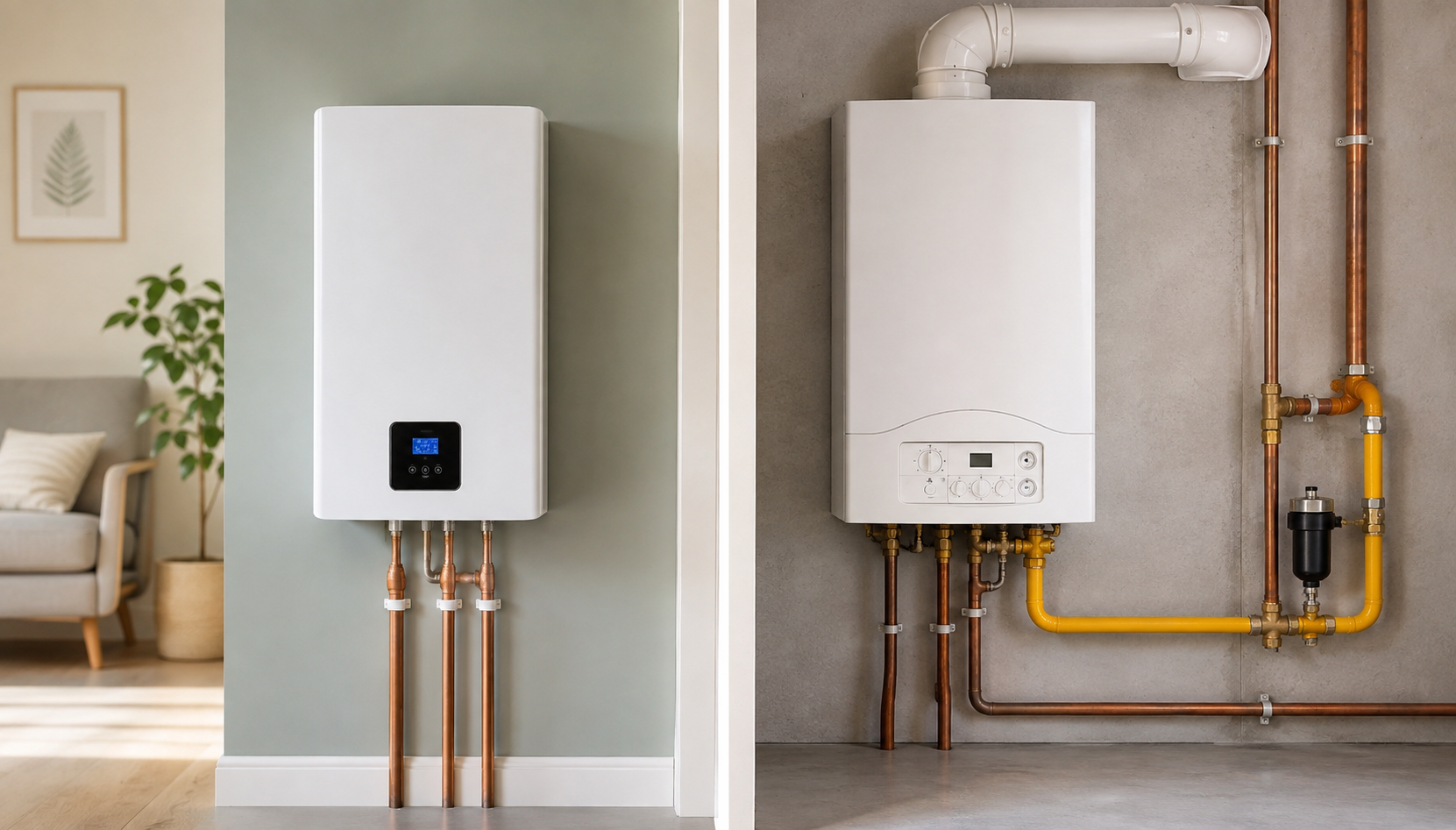
An electric boiler uses electricity to heat water through an electrical heating element. Once heated, the water is circulated through radiators or underfloor heating systems. Because there’s no combustion involved, an electric boiler doesn’t produce exhaust gases or require a flue. This can make installation simpler in some properties.
A gas boiler burns natural gas to generate heat. Modern condensing gas boilers capture some of the heat that would otherwise escape through the flue, improving their efficiency compared with older models. Gas boilers generally connect to a mains gas supply, although properties without mains gas may use LPG or another fuel.
When comparing electric boilers vs gas, it’s important to look beyond the boiler itself. Your home’s insulation, heating demand, hot water requirements, electricity or gas tariffs, and existing heating infrastructure can all influence performance and cost.
Electric boilers are often compact and relatively quiet. Gas boilers can deliver high heat output and are particularly common in larger homes with substantial heating and hot-water requirements. Neither option is automatically best for every household.
Running Costs and Energy Efficiency
Running costs are one of the biggest considerations when comparing electric and gas boilers. Although electricity prices and gas prices vary by location and over time, electricity has traditionally been more expensive per unit of energy than mains gas in many markets. This can make an electric boiler more expensive to operate for a property with high heating demand.
However, electric boilers have an important advantage: they can convert almost all of the electricity they consume into heat at the point of use. There’s no combustion process and no flue through which heat can escape. Gas boilers, on the other hand, lose some energy through combustion and exhaust gases, although modern condensing models are highly efficient.
This means you shouldn’t compare efficiency percentages alone. A boiler with excellent conversion efficiency can still cost more to operate if its energy source is significantly more expensive.
Electric heating can become particularly interesting when combined with renewable electricity. For example, homeowners with solar photovoltaic panels may be able to use some self-generated electricity for heating, potentially reducing reliance on grid electricity.
Another factor is heating control. Smart thermostats, programmable controls, zoning, and good insulation can reduce energy consumption regardless of boiler type.
If your priority is the lowest conventional heating fuel cost, gas may have an advantage in many situations. If your priority is electrification and compatibility with renewable energy, an electric system may offer greater long-term potential.
Installation, Space, and Maintenance
Installation requirements can make a major difference when deciding between these heating technologies. Electric boilers can be attractive because they don’t need a gas connection, combustion chamber, or traditional flue. This may give homeowners more flexibility when deciding where to install the unit.
Electric boilers are also generally compact and can be useful where space is limited. Their installation may involve electrical upgrades, however, particularly if the property requires a relatively high electrical load. Your home’s electrical supply must be assessed before installation.
Gas boilers require appropriate gas pipework, ventilation considerations, and a suitable flue arrangement. If a property already has a functioning gas central heating system, replacing an existing gas boiler may be relatively straightforward. Installing gas heating in a property that has never had a gas connection can be considerably more involved.
Maintenance is another point worth considering. Gas appliances involve combustion and require appropriate safety checks and servicing. Electric boilers don’t burn fuel, so they avoid many of the components associated with combustion.
That doesn’t mean electric boilers are maintenance-free. Pumps, valves, controls, heating elements, and other components can still develop faults.
For a homeowner starting from scratch, the simpler physical requirements of an electric boiler may be appealing. For someone replacing an existing gas boiler, sticking with gas could involve less disruption. The best choice depends heavily on the property’s existing infrastructure.
Environmental Impact and Future Energy Choices
Environmental considerations are becoming increasingly important in the heating market. Gas boilers burn fossil fuels, producing carbon dioxide during operation. Although modern gas boilers are significantly more efficient than older systems, they still rely on fossil fuel combustion.
Electric boilers don’t produce direct combustion emissions at the property. However, their overall environmental impact depends on how the electricity is generated. Electricity produced largely from renewable sources can make electric heating considerably cleaner than electricity generated from fossil fuels.
This distinction is important when thinking about the future. As electricity grids incorporate more renewable generation, electric heating can potentially benefit from a progressively lower-carbon energy supply.
Electric boilers can also fit into an increasingly electrified home. Solar panels, battery storage, smart energy management, and time-of-use electricity tariffs may allow homeowners to manage when and how they consume energy.
That said, an electric resistance boiler isn’t necessarily the most energy-efficient electric heating technology available. Heat pumps, for example, can move more heat into a property than the amount of electricity they consume, under suitable conditions.
For homeowners specifically comparing electric boilers with gas, the environmental argument often favors electricity when the electricity supply has a high renewable component. Gas can still provide reliable heating, but its fossil-fuel dependence is an important consideration for long-term decarbonisation.
Which Boiler Is Right for Your Home?
There isn’t a universal winner in the electric boilers vs gas comparison. Your property and heating requirements should determine the decision.
An electric boiler could be worth considering if your home doesn’t have access to mains gas, you have limited installation space, you want to avoid combustion appliances, or you’re interested in integrating heating with renewable electricity. It may also suit smaller or well-insulated properties with relatively modest heating requirements.
Gas may remain attractive if your property already has a gas connection, you have high heating and hot-water demand, and keeping operating costs low is a major priority. Larger homes can require substantial heat output, so the available electrical capacity should be considered carefully before choosing an electric boiler.
Insulation is just as important as boiler selection. A poorly insulated property can consume large amounts of energy regardless of the heating technology used. Improving loft insulation, wall insulation, windows, and draught-proofing can reduce heating demand before you invest in a new boiler.
You should also consider the long-term direction of energy prices and heating regulations in your area. A heating system that looks economical today may have different economics over its expected lifespan.
Before making a final decision, have a qualified heating professional assess the property’s heat demand, electrical supply, existing pipework, hot-water requirements, and installation options.
Conclusion
The choice between electric boilers vs gas ultimately depends on your home’s characteristics, energy prices, installation requirements, and long-term priorities. Electric boilers offer clean operation at the point of use, compact installation, and strong potential when paired with renewable electricity. Gas boilers, meanwhile, remain a familiar and practical option for many properties, particularly those already connected to the gas network. Running costs, heat output, environmental goals, and infrastructure should all be considered rather than focusing on efficiency alone. Whichever option you choose, improving insulation and using effective heating controls can make a substantial difference to energy consumption. A professional assessment can help you choose a system that matches your home’s actual heating needs.
FAQs
Are electric boilers cheaper than gas boilers to run?
Not necessarily. Electricity often costs more per unit of energy than mains gas, so electric boilers can have higher running costs in properties with significant heating demand. However, actual costs depend on local energy tariffs, insulation, heating requirements, and electricity sources.
Are electric boilers more efficient than gas boilers?
Electric boilers can convert nearly all the electricity they consume into heat at the point of use. Modern condensing gas boilers are also highly efficient, but some energy is lost through the combustion process and flue.
Can an electric boiler heat a whole house?
Yes. An appropriately sized electric boiler can provide central heating for an entire property. However, the home’s heat demand and available electrical capacity need to be assessed before installation.
Do electric boilers need a flue?
No. Electric boilers don’t burn fuel, so they don’t produce combustion gases that need to be discharged through a flue.
Which is better for the environment, electric or gas?
Electric heating can have a lower overall carbon impact when the electricity comes from renewable or low-carbon sources. Gas boilers directly burn fossil fuel and produce carbon dioxide during operation.
Can solar panels work with an electric boiler?
Yes. Solar photovoltaic panels can generate electricity that may be used by an electric boiler. However, heating demand and solar generation don’t always occur at the same time, so system design and energy management are important.
Are electric boilers suitable for large homes?
They can be, but large properties may require substantial electrical power for heating. A professional heat-loss calculation and electrical assessment should be completed before installation.
Which should I choose: electric or gas?
Consider your existing infrastructure, property size, heating demand, energy tariffs, installation costs, and environmental priorities. Getting professional advice based on your specific property is the safest way to make the decision.


