




Layering is one of the easiest ways to elevate your wardrobe, and few combinations are as timeless as a shirt in sweater. Whether you’re dressing for work, a casual outing, or a special occasion, pairing a shirt with a sweater creates a polished appearance while keeping you comfortable in cooler weather.
The beauty of this styling technique lies in its versatility. From crisp button-down shirts under lightweight crewnecks to relaxed Oxford shirts paired with chunky knit sweaters, the possibilities are nearly endless. A well-executed shirt-and-sweater combination can instantly make an outfit look more refined without feeling overly formal. In this guide, you’ll learn how to wear a shirt in sweater effectively, choose the right pieces, and create outfits that work for various occasions.
Why the Shirt-and-Sweater Combination Never Goes Out of Style
Fashion trends come and go, but the shirt-in-sweater pairing remains a staple because of its timeless appeal. This classic combination bridges the gap between formal and casual dressing, making it suitable for almost any setting.
One reason it works so well is its versatility. A dress shirt layered beneath a fine-knit sweater creates a professional office look, while an Oxford shirt paired with a chunky sweater feels relaxed and approachable. The contrast between the structured shirt collar and the soft texture of a sweater adds visual interest without requiring bold patterns or accessories.
Another advantage is practicality. Layering helps regulate body temperature, allowing you to stay comfortable throughout the day. If temperatures rise, you can simply remove the sweater while maintaining a stylish appearance.
This combination also offers year-round flexibility. Lightweight cotton sweaters work during spring and fall, while wool and cashmere options provide warmth during winter. Because of its adaptability and sophistication, the shirt in sweater look continues to be a favorite among fashion-conscious men and women alike.
Choosing the Right Shirt for Layering
Not every shirt works equally well under a sweater. Selecting the right style and fit is crucial for creating a clean, comfortable appearance.
Button-down shirts are among the most popular choices. Their collars stay in place and complement crewneck, V-neck, and quarter-zip sweaters. Oxford cloth shirts are especially versatile because they offer a slightly casual texture that pairs well with knitwear.
Fit matters significantly when layering. An oversized shirt can bunch up beneath the sweater, creating an untidy silhouette. A slim or tailored fit generally works best because it sits smoothly against the body without adding unnecessary bulk.
Color selection also plays a major role. White, light blue, and pale gray shirts are classic options that pair easily with most sweater colors. For a more contemporary look, consider subtle patterns such as thin stripes or small checks.
Fabric choice should match the season. Lightweight cotton shirts are ideal for warmer months, while brushed cotton or flannel shirts provide extra warmth during colder weather. By selecting the right shirt, you’ll create a polished foundation for any layered outfit.
Finding the Perfect Sweater Style
The sweater you choose determines the overall tone of your outfit. Different necklines, materials, and fits create distinct looks, so understanding your options is essential.
Crewneck sweaters are perhaps the most versatile. They allow the shirt collar to peek out naturally while maintaining a clean appearance. This style works well in both professional and casual environments.
V-neck sweaters offer a slightly dressier aesthetic. Because they reveal more of the shirt and tie, they’re particularly suitable for business attire. Many professionals favor V-necks for office settings where a polished look is required.
Turtlenecks can also be layered with shirts, though this approach is less common. It creates a sophisticated, fashion-forward appearance when styled correctly.
Material selection affects both comfort and style. Merino wool provides warmth without excessive bulk, while cashmere delivers luxury and softness. Cotton sweaters are breathable and ideal for transitional seasons.
Fit remains important. A sweater should skim the body comfortably without being too tight or too loose. Properly fitted knitwear enhances your silhouette and ensures the shirt underneath remains smooth and tidy.
Styling a Shirt in Sweater for Different Occasions
One of the biggest advantages of wearing a shirt in sweater is its adaptability. With a few adjustments, you can create outfits suitable for various occasions.
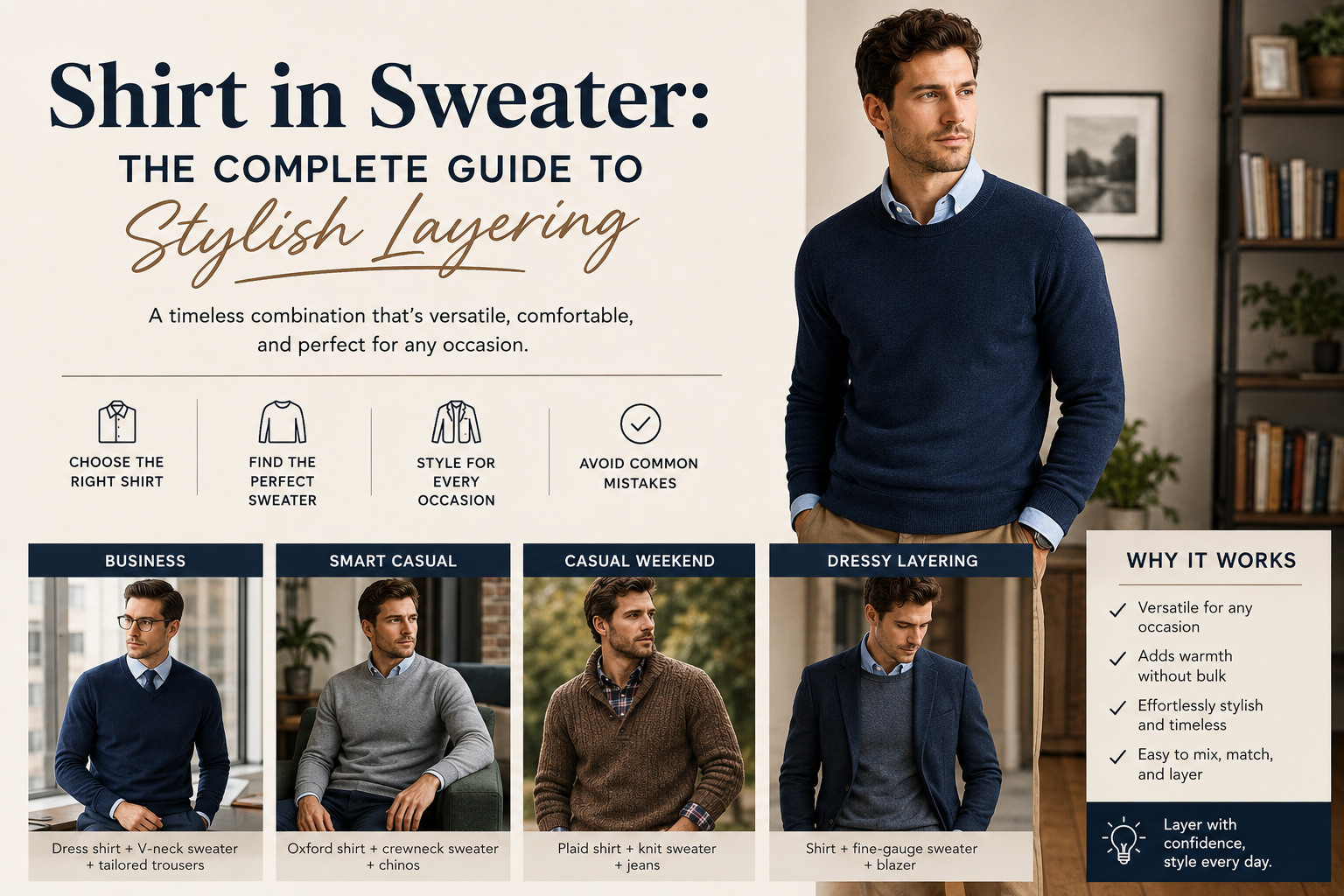
For business settings, pair a light blue dress shirt with a navy V-neck sweater and tailored trousers. Add leather shoes to complete a professional ensemble. This combination strikes the perfect balance between formal and approachable.
Smart-casual events call for a more relaxed approach. Try an Oxford shirt beneath a crewneck sweater paired with chinos and loafers. The result is polished yet comfortable.
For weekend outings, opt for a plaid shirt under a chunky knit sweater with dark jeans and boots. This creates a rugged, seasonal look that feels effortlessly stylish.
Even formal occasions can benefit from strategic layering. A crisp white shirt, fine-gauge sweater, blazer, and dress pants create a sophisticated appearance without the stiffness of a traditional suit.
By adjusting colors, textures, and accessories, you can transform the same basic layering concept into countless stylish outfits.
Common Mistakes to Avoid When Wearing a Shirt in Sweater
Although this layering technique is relatively simple, several mistakes can diminish its impact.
One common issue is wearing a shirt that’s too bulky. Excess fabric creates wrinkles and discomfort beneath the sweater, disrupting the outfit’s clean lines.
Another mistake is choosing clashing colors. While contrast is important, extremely bright or conflicting shades can appear uncoordinated. Neutral and complementary tones generally work best.
Ignoring collar placement is also problematic. A collar that’s folded awkwardly or hidden unevenly beneath the sweater can make an otherwise polished outfit look careless. Ensure the collar sits neatly and consistently.
Many people also overlook sleeve length. Shirt cuffs should extend slightly beyond the sweater sleeves for a refined appearance, particularly in business settings.
Finally, avoid layering pieces that are too tight. Restrictive clothing reduces comfort and creates an unflattering silhouette. A balanced fit ensures both style and ease of movement.
Paying attention to these details helps you achieve a more polished and confident look every time.
Conclusion
The shirt in sweater combination remains one of the most versatile and stylish layering techniques in modern fashion. It blends sophistication, comfort, and practicality, making it suitable for professional environments, casual gatherings, and everything in between. By selecting the right shirt, choosing an appropriate sweater, and paying attention to fit and color coordination, you can create countless outfit variations that look polished and effortless. Whether you prefer classic business attire or relaxed weekend style, mastering this timeless combination will help you build a wardrobe that feels both fashionable and functional throughout the year.
FAQs
What type of shirt works best under a sweater?
Button-down shirts, Oxford shirts, and dress shirts are the most popular choices because they maintain structure and layer smoothly.
Should the shirt collar be visible?
Yes, in most cases. Allowing the collar to show adds definition and creates a polished layered appearance.
Can I wear a shirt in sweater casually?
Absolutely. Pair an Oxford or plaid shirt with a crewneck sweater and jeans for an easy smart-casual outfit.
Which sweater neckline is best for layering?
Crewneck and V-neck sweaters are the most versatile options. V-necks are slightly dressier, while crewnecks work for nearly any occasion.
Can I wear a tie with a sweater?
Yes. A V-neck sweater paired with a dress shirt and tie is a classic business-casual look.
What colors pair best together?
White, light blue, gray, navy, beige, and burgundy are timeless choices that coordinate easily with most wardrobes


