





Introduction
Agriculture is much more than planting crops and raising livestock—it’s a hands-on lifestyle that teaches teamwork, patience, problem-solving, and responsibility. That’s why educators, community leaders, and parents are increasingly using physical games related to agriculture to make learning exciting. These activities combine movement with practical farming concepts, helping participants understand agricultural practices while staying active.
Whether you’re organizing a school event, a farm education program, or a community fair, agriculture-themed games create memorable learning experiences. Instead of simply reading about farming, participants experience challenges that reflect real agricultural tasks in a fun and engaging way. In this guide, you’ll discover some of the best physical agriculture games, their educational benefits, and tips for organizing successful activities.
Why Physical Agriculture Games Matter
Traditional classroom lessons provide valuable knowledge, but physical activities help learners retain information more effectively. When participants move, compete, and cooperate, they engage multiple learning styles simultaneously.
Agriculture-themed games introduce concepts such as planting, harvesting, irrigation, soil management, and animal care through action rather than lectures. This approach is especially effective for children, who naturally learn through play.
Some of the biggest educational benefits include:
- Improved teamwork and communication
- Better understanding of farming processes
- Increased physical fitness
- Stronger problem-solving abilities
- Greater appreciation for food production
- Enhanced environmental awareness
Many agricultural schools and youth organizations use these games during field days, summer camps, and educational festivals. They encourage participants to think critically while enjoying healthy competition.
Physical games also help bridge the gap between urban and rural communities. Children who have never visited a farm can better understand where food comes from through engaging activities that simulate real farming tasks
Popular Physical Games Related to Agriculture
One of the reasons these games remain popular is their flexibility. They can be adapted for different age groups, spaces, and educational goals.
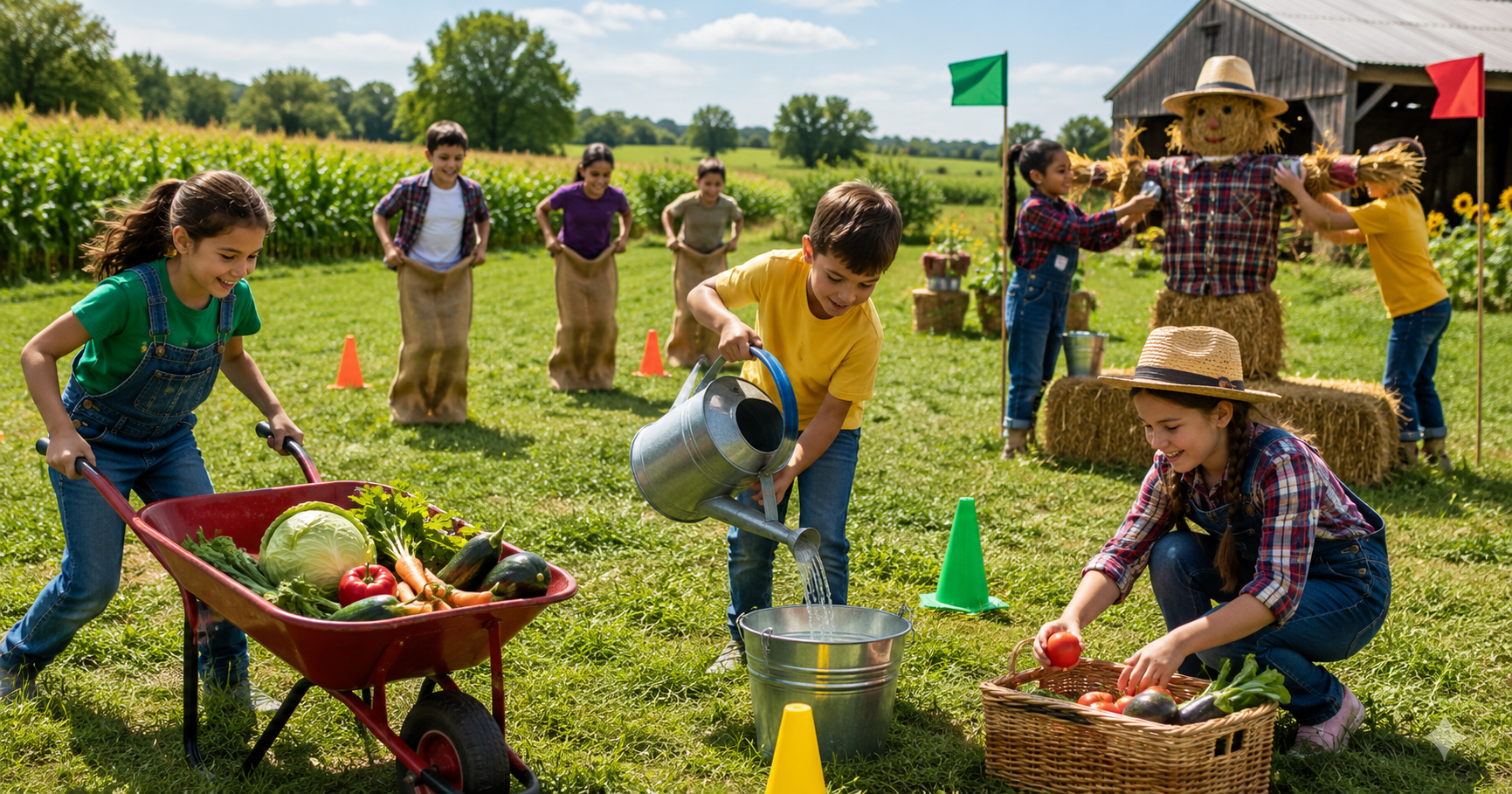
Seed Planting Relay
Participants race while carrying “seeds” (such as bean bags or balls) to designated planting stations. They return to tag the next teammate, making the activity both energetic and educational.
Harvest Race
Players collect plastic fruits or vegetables scattered across a field or playground. The objective is to harvest as many crops as possible before time runs out.
Wheelbarrow Challenge
Teams transport lightweight farming supplies using wheelbarrows. This game introduces concepts related to transporting harvested produce while encouraging coordination.
Water Bucket Relay
Water management is essential in agriculture. Participants carry water using cups or small buckets to fill a container without spilling too much, demonstrating the importance of efficient irrigation.
Scarecrow Dress-Up Competition
Teams race to dress one teammate as a scarecrow using hats, shirts, gloves, and straw decorations. This creative game highlights traditional crop protection methods.
Each activity teaches practical agricultural concepts while keeping participants physically engaged and entertained.
Organizing Successful Agriculture-Themed Outdoor Activities
Planning agricultural games doesn’t require a large budget. With simple materials and creative ideas, schools and organizations can host enjoyable learning events.
Start by choosing games appropriate for participants’ ages and physical abilities. Younger children benefit from simple relay races, while older students can enjoy more challenging obstacle courses inspired by farming tasks.
Essential supplies may include:
- Buckets
- Bean bags
- Plastic fruits and vegetables
- Rope
- Cones
- Wheelbarrows
- Water containers
- Gardening gloves
Safety should always come first. Ensure the playing area is free from hazards and provide drinking water, especially during warm weather.
Adding educational stations between games can further reinforce learning. For example, after a harvesting relay, participants might identify different crop types or discuss sustainable farming practices.
Reward participation rather than focusing solely on winning. Certificates, seed packets, gardening tools, or small farm-themed prizes motivate learners while reinforcing agricultural themes.
Finally, encourage teamwork by mixing participants into diverse groups. This helps build communication skills and creates a more inclusive learning environment.
Agriculture Games for Schools, Camps, and Community Events
Agricultural activities can be tailored to fit many different educational settings.
School Sports Days
Schools often include farm-themed relay races during annual sports festivals. These events combine physical education with science and environmental learning.
Summer Camps
Nature camps frequently organize gardening competitions, planting races, and compost challenges. These activities teach sustainability while keeping children active outdoors.
Agricultural Fairs
County fairs and farming exhibitions regularly feature games such as sack races, hay bale obstacle courses, and livestock-themed competitions. These traditions celebrate rural culture and farming heritage.
Family Farm Days
Families visiting educational farms enjoy interactive experiences like egg collection races, vegetable harvesting contests, and animal care demonstrations.
Youth Agricultural Clubs
Organizations such as farming clubs and environmental groups use physical games to reinforce leadership, teamwork, and agricultural education.
These activities also strengthen community engagement by bringing together participants of different ages. Parents, teachers, and volunteers often join the games, making learning a shared experience.
Because agriculture touches everyone’s daily lives through food production, these games help participants better appreciate farmers’ hard work and the importance of sustainable farming.
Educational Benefits Beyond Physical Activity
While the games are entertaining, their long-term educational value extends well beyond exercise.
Participants develop a stronger understanding of:
- Crop production cycles
- Soil conservation
- Water management
- Farm equipment safety
- Livestock care
- Sustainable agriculture
- Food supply chains
Many games require strategic thinking, planning, and collaboration, making them excellent tools for developing critical life skills.
Students also gain confidence as they solve challenges, complete tasks, and work together toward common goals. These experiences encourage leadership and resilience in ways traditional classroom instruction often cannot.
Environmental education naturally fits into agriculture games as well. Activities focusing on recycling, composting, pollination, or water conservation help learners understand the importance of protecting natural resources.
Teachers frequently report higher engagement levels when agricultural concepts are introduced through interactive games rather than worksheets or lectures. The combination of movement, teamwork, and practical learning makes the lessons memorable long after the activities end.
For communities seeking innovative educational programs, agriculture games offer an affordable and highly effective solution.
Conclusion
Learning about farming doesn’t have to happen only in textbooks or classrooms. Physical games related to agriculture provide an enjoyable way to explore farming practices while promoting teamwork, fitness, creativity, and environmental awareness. Whether you’re planning activities for schools, camps, agricultural fairs, or family events, these games make agricultural education both practical and memorable. By combining movement with real-world farming concepts, participants develop valuable life skills while gaining a deeper appreciation for the people and processes that produce our food.
Frequently Asked Questions
What are physical games related to agriculture?
They are interactive activities that teach farming concepts through movement, teamwork, and hands-on participation.
Why are agriculture games important for students?
They improve understanding of farming, encourage physical activity, develop teamwork, and make learning more engaging.
Can agriculture games be played indoors?
Yes. Many activities, such as seed sorting races, scarecrow dress-up, and farming trivia relays, can be adapted for indoor spaces.
What age group can participate in agriculture games?
Most games can be modified for preschool children, school students, teenagers, and even adults.
What materials are needed for agriculture-themed games?
Basic supplies like buckets, bean bags, cones, ropes, plastic fruits, gardening gloves, and wheelbarrows are commonly used.
Are these games suitable for community events?
Absolutely. They’re popular at school festivals, farm visits, agricultural fairs, youth camps, and environmental awareness programs.


